


Key takeaways
- An LMS administers training: it stores, distributes and tracks content, often for regulatory purposes.
- An LXP orchestrates a personalized, continuous learning experience, with recommendations, gamification and social learning.
- A good LXP in 2026 is mobile-native, offers short formats natively and provides analytics on usage and engagement.
- The main selection criteria are mobile UX, learning formats, personalization, gamification, analytics and integration with your HR systems.
LMS vs LXP comes down to one difference: an LMS (learning management system) is built to manage and track training, while an LXP (learning experience platform) is built to engage learners with personalized, short and often mobile content. If your priority is compliance and administration, an LMS fits; if your priority is engagement and continuous skill building, choose an LXP, and many companies run both.
In 2026, training teams is no longer just about distributing content. It means offering a learning experience that is smooth, engaging and aligned with how employees actually work. That is the promise of the LXP, and it explains why so many companies compare it with their existing LMS.
Choosing the right platform is still the hard part, because not all LXPs are equal. Some struggle with mobile use. Others lack flexibility or interactivity. Few combine accessibility, rich formats and solid instructional quality. If you need the basics first, start with our guide to what an LXP is.
LMS vs LXP: what is the difference in 2026?
The difference is one of purpose: the LMS manages training, the LXP engages learners. In 2026, the LXP has become more than an LMS with a new interface: it is an engagement platform.
| Criterion | LMS (learning management system) | LXP (learning experience platform) |
|---|---|---|
| Main purpose | Administer training: store, assign, track | Engage learners and personalize their learning |
| Who drives the learning | The training team assigns courses | The learner, guided by recommendations |
| Typical formats | E-learning modules, PDFs, catalog courses | Microlearning, quizzes, stories, short videos |
| Device | Mostly desktop | Mobile-first, any device |
| Engagement levers | Mandatory assignments and reminders | Gamification, social learning, notifications |
| Key metrics | Completion and compliance | Usage, engagement and progress |
| Best for | Regulatory training, certifications, long programs | Continuous skill building and daily engagement |
Why a traditional LMS is no longer enough
The LMS (learning management system) has long been the standard solution for managing training. It stores, distributes and tracks learning content, often for regulatory or administrative purposes. You can read more about its functions in our article on what an LMS is. But this management-oriented model is showing its limits.
LMSs are often rigid, not very intuitive and focused on compliance rather than experience. The result: users log in because they have to, not because they want to, engagement rates are low and the real impact on skills is hard to measure. Now that employees expect a smooth, simple and useful experience, the LMS is no longer enough on its own.
LXP: a personalized, continuous learning experience
This is where the LXP comes in. Unlike the LMS, it does not just distribute content. It aims to orchestrate a tailored learning experience that is continuous and motivating, taking into account each learner's habits, preferences and specific needs.
A modern LXP lets everyone browse short, targeted content, often recommended intelligently based on their profile or activity. It builds in engagement mechanics, gamification and social learning. The learner becomes an active participant in their own path, not just a recipient.
In that sense, the LXP mirrors consumer digital habits: personalization, recommendations, immediacy. Its ability to turn training into an experience is what makes it relevant in 2026.
Why mobile-first and user-centric design matters
Mobile use is part of everyday life. Employees check content between meetings, during their commute or in the field. If an LXP is not designed for mobile, it misses its target. That is not an option, it is a requirement.
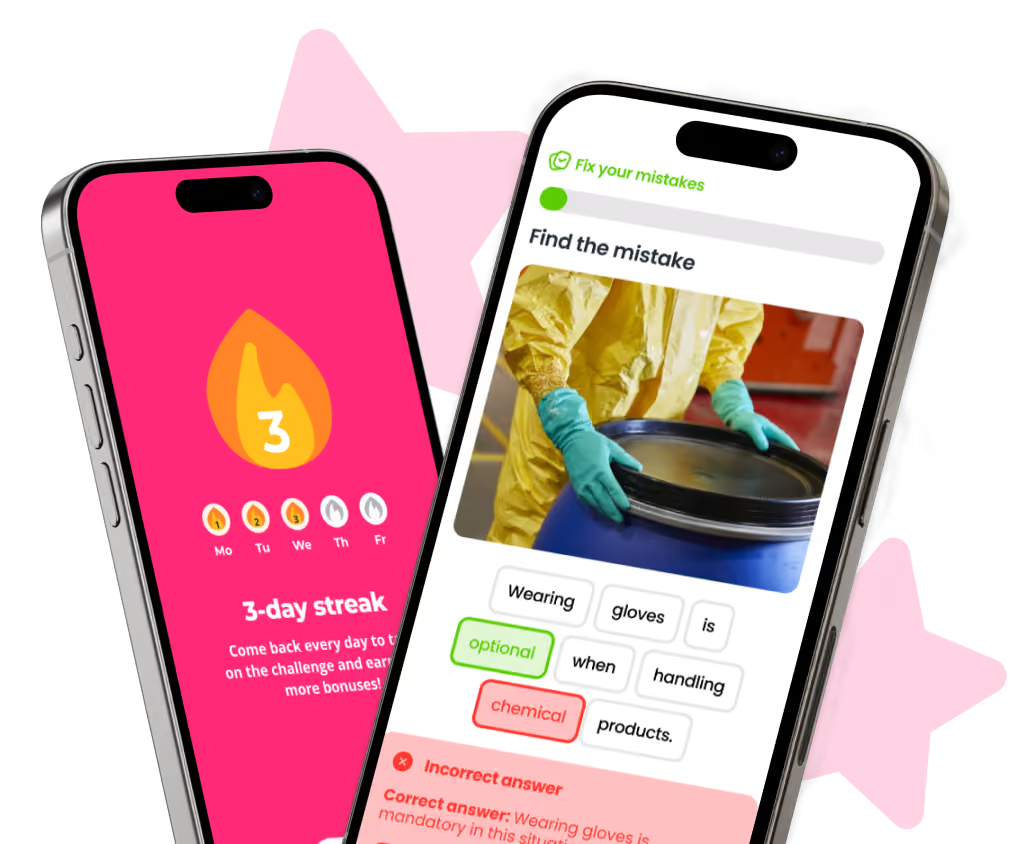
An effective LXP in 2026 must be mobile-native, with a smooth interface, content suited to small screens and quick interactions. That means flawless usability, but also the right formats: microlearning, interactive stories, short quizzes, targeted notifications.
A user-centric experience also means a platform that respects the learner's time, makes training accessible without friction and fits into their habits. This shift in stance is fundamental. It separates platforms that actually train people from those that simply distribute content.
How do you choose the right LXP?
Choose an LXP on three groups of criteria: mobile user experience, native short learning formats, and the combination of personalization, gamification, analytics and integration. A platform that falls short on any of them will struggle to keep learners coming back.
Mobile accessibility, ease of use and UX
User experience is no longer a bonus. It has become a core selection criterion. An LXP must offer a simple, smooth and intuitive interface on any device. Above all, it must work perfectly on mobile, with no compromise.
That means touch-optimized navigation, a clear content structure and instant responsiveness. A platform that is too heavy, too slow or too complex quickly discourages users. The goal is not only to access training, but to come back to it regularly and willingly.
Good UX design is not just about looks. It directly drives adoption and engagement. A well-designed LXP fades into the background and lets the content and the learning experience take center stage.
Which learning formats should an LXP offer?
Formats play a decisive role in the quality of the experience. In 2026, e-learning modules and downloadable PDFs are no longer enough. Users expect brief, targeted, interactive content they can consume at any time.
This is where microlearning makes sense. It goes well beyond "short content": it means delivering useful, contextual information that is easy to remember. Quizzes, interactive stories, flash messages and gamified paths all contribute to this.
An LXP should offer these formats natively, without complex integrations. It should make it simple to create, organize and distribute this content while keeping high instructional quality.
Personalization, gamification, analytics and integration
A good LXP adapts to each user through smart recommendations, personalized paths and targeted notifications. The more the platform learns about the user, the better it can guide them to the right content at the right time.
Gamification reinforces engagement. It introduces game mechanics, challenges and leaderboards that boost motivation without undermining the seriousness of learning. Used well, it turns repetition into an enjoyable routine.
Finally, a strong LXP must provide advanced tracking tools. Analytics should measure usage, engagement and progress. All of this must integrate smoothly into the company's digital ecosystem: HRIS, internal communication tools, HR databases and so on.
The trio of personalization, gamification and analytics has become a standard. The best platforms treat it as a performance lever, not an add-on.
SPARTED, the mobile-native LXP built for 2026
SPARTED is an LXP designed from the start for mobile use, with short gamified formats and analytics for training teams. It is built for employees who learn between tasks, in the field or on the go.
An experience designed for real mobile use
SPARTED is not an LXP adapted to mobile. It is a platform designed from the start for mobile-first use. The interface is smooth, simple and touch-optimized, on smartphone or tablet. Users reach their content in a few taps, with no complex flow or technical friction.
This mobile-native approach lets employees train whenever and wherever they want, with no constraint of place or equipment. Between two appointments, in the field or on the move, SPARTED fits into the day without disrupting work.
This is a fundamental difference. Many mobile platforms are limited adaptations of desktop solutions; SPARTED offers a true mobile experience, designed to capture attention, engage quickly and make every minute of learning count.
Formats designed to capture attention and make knowledge stick
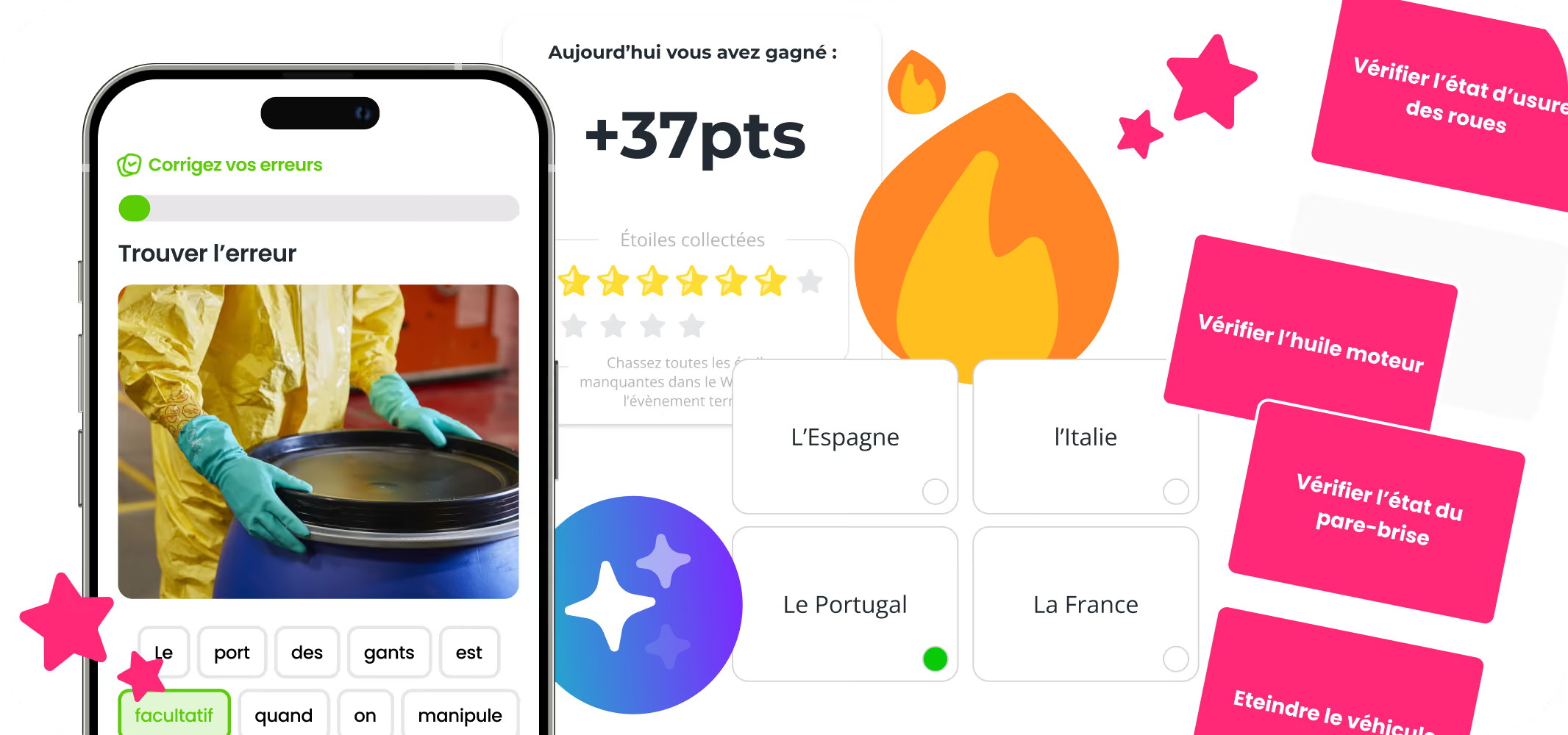
Where many LXPs struggle to make training attractive, SPARTED offers a range of formats designed to keep learners engaged over time. Courses in a stories format provide visual, immersive progress, with sequenced content that sparks curiosity. Campaigns, in the form of gamified quizzes, turn learning into a motivating challenge.
SPARTED goes further with Breaking News and personalized notifications. These short, targeted messages reinforce key messages at the right time, to alert, motivate or remind people of essential knowledge. Creation stays simple thanks to a built-in AI assistant that helps structure, write and publish content quickly.
All these formats follow an effective microlearning logic: short, repeated, interactive and useful content. That combination is what gives the platform its instructional strength.
Why SPARTED is a strategic choice
Choosing SPARTED in 2026 means choosing a specialized, mobile-native, engagement-driven LXP. It meets the expectations of end users, who want simplicity and rhythm, and the requirements of HR and training teams, who need a measurable, customizable and durable tool.
The platform lets you produce quickly, distribute widely and track usage precisely. Above all, it helps build a culture of continuous learning without demanding a disproportionate effort. It is an agile solution that integrates easily and evolves with usage, in particular through its built-in AI.
SPARTED is not a compromise between an LMS and innovation. It is a different way to approach training, centered on the user, on mobile and on real results.
Frequently asked questions
What is the main difference between an LMS and an LXP?
An LMS is designed to administer training: assign courses, track completion and prove compliance. An LXP is designed around the learner, with personalized recommendations, short formats and social features that drive engagement.
Can an LXP replace an LMS?
Sometimes, but not always. Companies with heavy compliance and certification needs usually keep their LMS for tracking and add an LXP for daily engagement. Organizations with mostly frontline teams and light regulatory needs may rely on an LXP alone.
What should I look for when choosing an LXP?
Look at mobile usability first, then at the learning formats available natively (microlearning, quizzes, stories), personalization, gamification, analytics on engagement and progress, and integration with your HRIS and internal communication tools.


Need a mobile learning solution?
A simple, fast and engaging solution, up and running in under 2 weeks.
Discover our solutionYour mobile-native LXP for 2026
SPARTED combines microlearning, gamification and analytics in an LXP built for frontline teams. Simple to deploy, powerful to use.
Book a demoGuide How to measure the ROI of your frontline training
Concrete calculations, proven methods and field examples to justify your training investment to leadership.
Read the guide →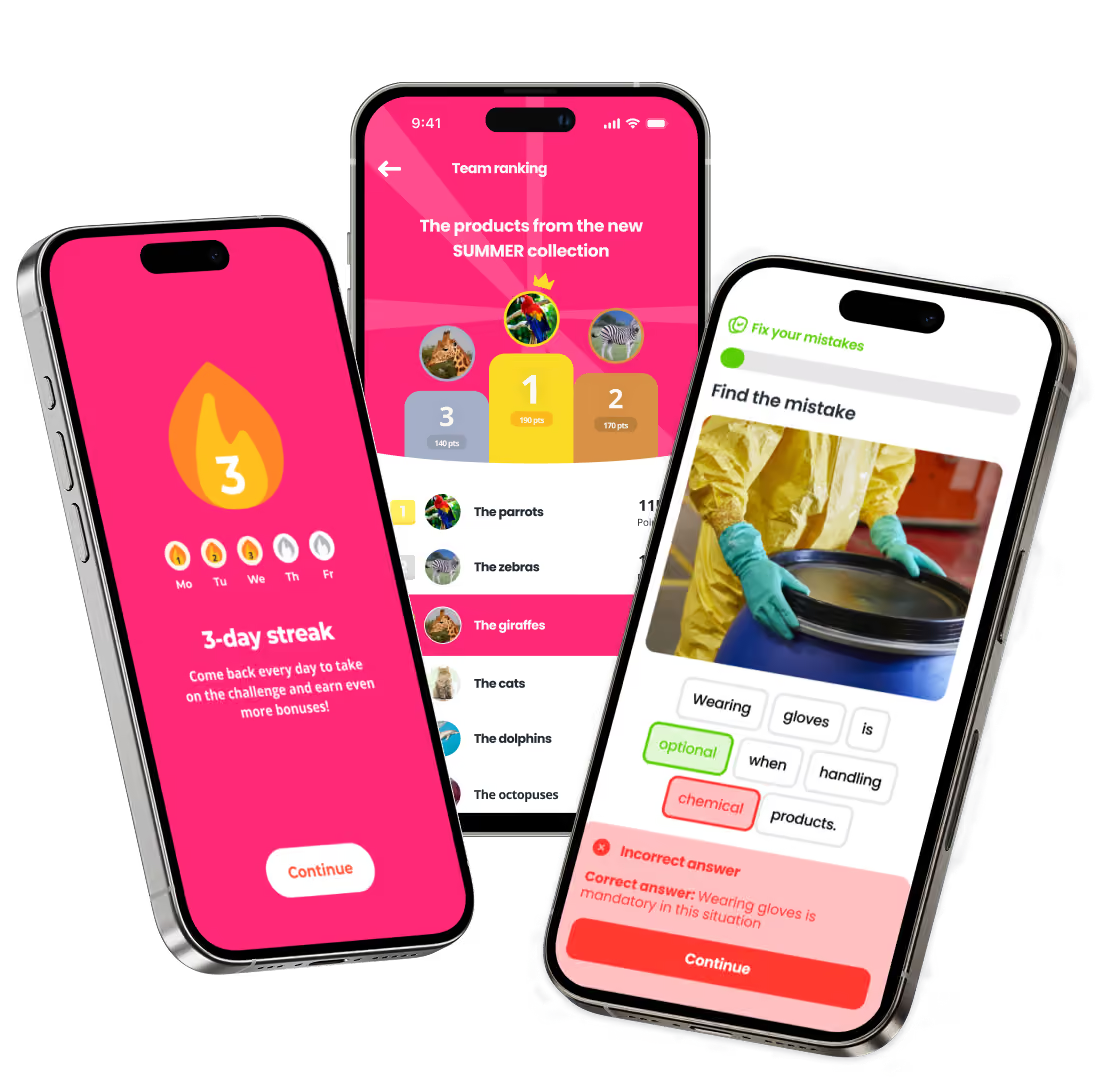
Need a mobile learning solution?
The simple, social and gamified solution, up and running in under 2 weeks.
Discover our solution