



Key takeaways
- In 2026, the most effective training programs fit into employees' daily routine instead of interrupting it.
- AI plays two roles: personalizing the learning experience and speeding up content creation.
- Short, regular formats such as microlearning are becoming the standard for retention, especially for frontline teams.
- Completion rates are no longer enough: companies measure what is retained, applied and reflected in business results.
- A learning culture is now a strategic lever for adaptation and talent retention.
The main digital learning trends for 2026 are daily learning habits, learner autonomy, consumer-grade user experience, AI for personalization and content creation, short formats, social learning, blended formats, learning in the flow of work, impact-based measurement and a strong learning culture. What they have in common: training is moving from occasional events to short, frequent and measurable learning built into the workday.
Digital learning keeps evolving with technology, ways of working and learner expectations. That shift starts with helping employees become comfortable with digital tools, so new practices actually get adopted. Some trends come back every year, but others reveal deep changes in how companies design, deliver and experience training.
Rather than another predictable list, this is a curated selection based on recent industry research, our ongoing market watch and our day-to-day conversations with training professionals, close to frontline realities. The result is 10 trends that reflect concrete changes in practices, formats and expectations, to help you build a training strategy that is truly in step with 2026.
| Trend | What changes in 2026 |
|---|---|
| 1. Daily learning habit | Training becomes a short daily routine, not an event |
| 2. Learner autonomy | On-demand content within a clear framework |
| 3. User-centered experience | Consumer-app UX, mobile first |
| 4. AI | Personalized paths and faster content creation |
| 5. Short formats | A few minutes per module for better retention |
| 6. Social learning | Peer exchange, comments and team challenges |
| 7. Blended formats | In-person, e-learning and mobile combined in one path |
| 8. Learning in the flow of work | Training inside everyday work tools |
| 9. Impact measurement | Retention and business KPIs, not just completion |
| 10. Learning culture | Learning as a strategic lever for talent retention |
1. Learning as a daily habit
Training is no longer an event, it is becoming a habit. In 2026, the best-performing programs are not the ones with the most complex paths, but the ones that fit into employees' daily routine without disrupting it.
People learn a little every day, in a short, focused format that slots naturally between two tasks or into a moment of downtime. This regular reinforcement changes the learner's mindset. You no longer "take" a training course, you adopt a learning routine. Mobile microlearning makes this possible by creating a daily habit rather than an occasional appointment, sometimes in just 3 minutes a day.
2. The rise of learner autonomy
Learner autonomy is the shift from imposed courses to employees choosing their own content, formats and timing. With ever larger catalogs, employees no longer want to be locked into rigid paths. They expect freedom in what they learn, how and when. This changes the way companies structure their training offer.
But autonomy does not mean isolation. The best programs in 2026 offer on-demand paths, personalized recommendations and open-access content, while keeping a clear framework. The goal is to empower learners without leaving them alone in front of an ocean of content.
3. A user-centered training experience
User experience is no longer optional. When an employee drops out of a training module, it is not always for lack of motivation. Sometimes the interface alone is enough to put them off. In 2026, the most effective platforms adopt the codes of consumer apps: smooth navigation, clean design, mobile-first logic and simple interactions.
The experience matters as much as the content. The more intuitive the tool, the more lasting the engagement. That is why ease of use, speed of access and clear learning paths are becoming key criteria when choosing a training tool. A pleasant experience also acknowledges that employees' time and attention are valuable.
4. How is AI changing digital learning in 2026?
AI is changing digital learning in two ways: it personalizes the learning experience by recommending the right content at the right time, and it speeds up the creation of training modules by generating text, quizzes and interactive scenarios. It is no longer a futuristic promise but part of everyday training practice.
Adoption is broad. According to Gallup (2025), 45% of U.S. employees used AI at work a few times a year or more in the third quarter of 2025, up from 21% in 2023. Training teams are no exception.
This automation also raises questions of quality and instructional consistency. AI does not replace the trainer, it assists them. The most advanced companies know how to combine the power of AI with a human vision of learning design, to deliver an experience that is both tailored and relevant.
5. Short formats for better retention
Short formats are becoming the standard because they hold attention and make content easier to remember. The days of 45-minute modules seem to be over. In 2026, effectiveness depends on the ability to capture attention quickly, deliver a clear message and support memorization. Short content, or snack content, takes a few minutes to learn, review or self-test.
This is not a passing fad but a cognitive reality: the more concise and contextual the content, the better it is remembered. Microlearning meets this need. Delivered at a regular pace, it becomes a strong retention tool, especially for frontline teams with limited time.
6. The return of the group: social and peer learning
Social learning is the practice of learning from and with colleagues, and it is back at the center of training programs. As more of work goes digital, the need for human exchange has never been stronger. Employees do not just want to consume content: they want to share, ask questions and compare experiences.
Comments, reactions, shared experiences and team challenges are not extras. They strengthen engagement, consolidate learning and make the most of collective intelligence. In 2026, the most complete programs offer both individual access to knowledge and a shared space for discussion and learning.
7. Blended learning becomes the norm
Digital does not replace in-person training, it complements it. In 2026, training is no longer designed in silos. In-person, e-learning, mobile learning, synchronous and asynchronous formats all coexist and reinforce each other.
This blend meets employees' different constraints: some need face-to-face interaction, others prefer to learn on their own. The challenge is no longer to choose a channel, but to build a seamless path that alternates high points (workshops, virtual classes) with short moments (microlearning, podcasts, videos) depending on the context.
8. Training built into everyday tools
Learning in the flow of work means bringing training into the tools employees already use instead of sending them elsewhere. Why ask employees to leave their tools to learn, when you can bring training to where they work? In 2026, digital learning plugs into the work environment: CRM, business tools, intranet and internal messaging.
The goal is clear: reduce friction and put learning in context, so that skills develop in real time, right next to the action. This also applies to frontline staff, for whom mobile access is essential. Deskless workers make up 80% of the global workforce, according to venture capital firm Emergence.
9. Measurement goes beyond completion rates
In training, what counts is not what is started, but what is retained and reused. In 2026, companies take a finer approach to evaluation, combining usage data, engagement rates, self-assessments and, above all, business performance indicators.
This approach helps manage programs better and also demonstrates their concrete impact to operational leadership, as detailed in our guide to measuring mobile learning ROI. Data becomes a shared language between HR, managers and learners.
10. Learning culture becomes a strategic lever
A learning culture is an environment where everyone feels entitled and encouraged to keep learning, and in 2026 it is a strategic asset. The most resilient companies understand that training is not just an HR tool. It is a pillar of their strategy for adaptation, growth and talent retention.
The stakes are high: according to Gallup's State of the Global Workplace report (2025), global employee engagement fell from 23% to 21% in 2024. Building a learning culture means making sure everyone, at every level, feels legitimate to learn, encouraged to grow and supported along the way. This culture does not happen by chance. It is built with tools, rituals, trained managers and solutions like SPARTED that make learning accessible to everyone, every day.
How SPARTED fits these digital learning trends
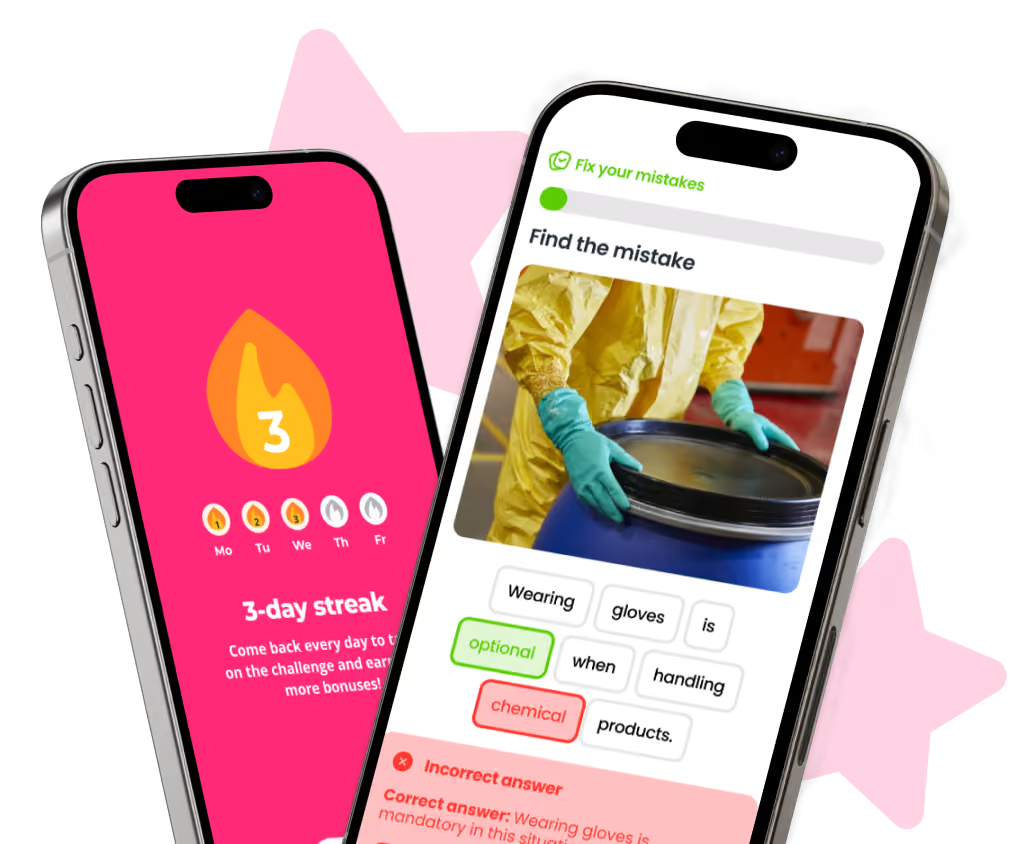
SPARTED puts these digital learning trends into practice with short daily mobile training for frontline teams. Trends are not just weak signals or buzzwords. They reflect an operational reality you can observe in the field, and that is where SPARTED sits: at the crossroads of technology, new learner expectations and the concrete needs of training teams.
For years, we have built SPARTED on one conviction: training should be simple, regular, engaging and accessible. That is why our solution aligns naturally with the 2026 dynamics.
- Train every day without cognitive overload
3 minutes a day, through campaigns of micro-content pushed automatically: SPARTED turns training into a lasting habit, not a one-off obligation. - Combine autonomy and activation
Users can freely access self-paced Courses, while receiving contextual content at a regular pace. Autonomy becomes structured, without becoming a free-for-all. - Offer a smooth, engaging mobile experience
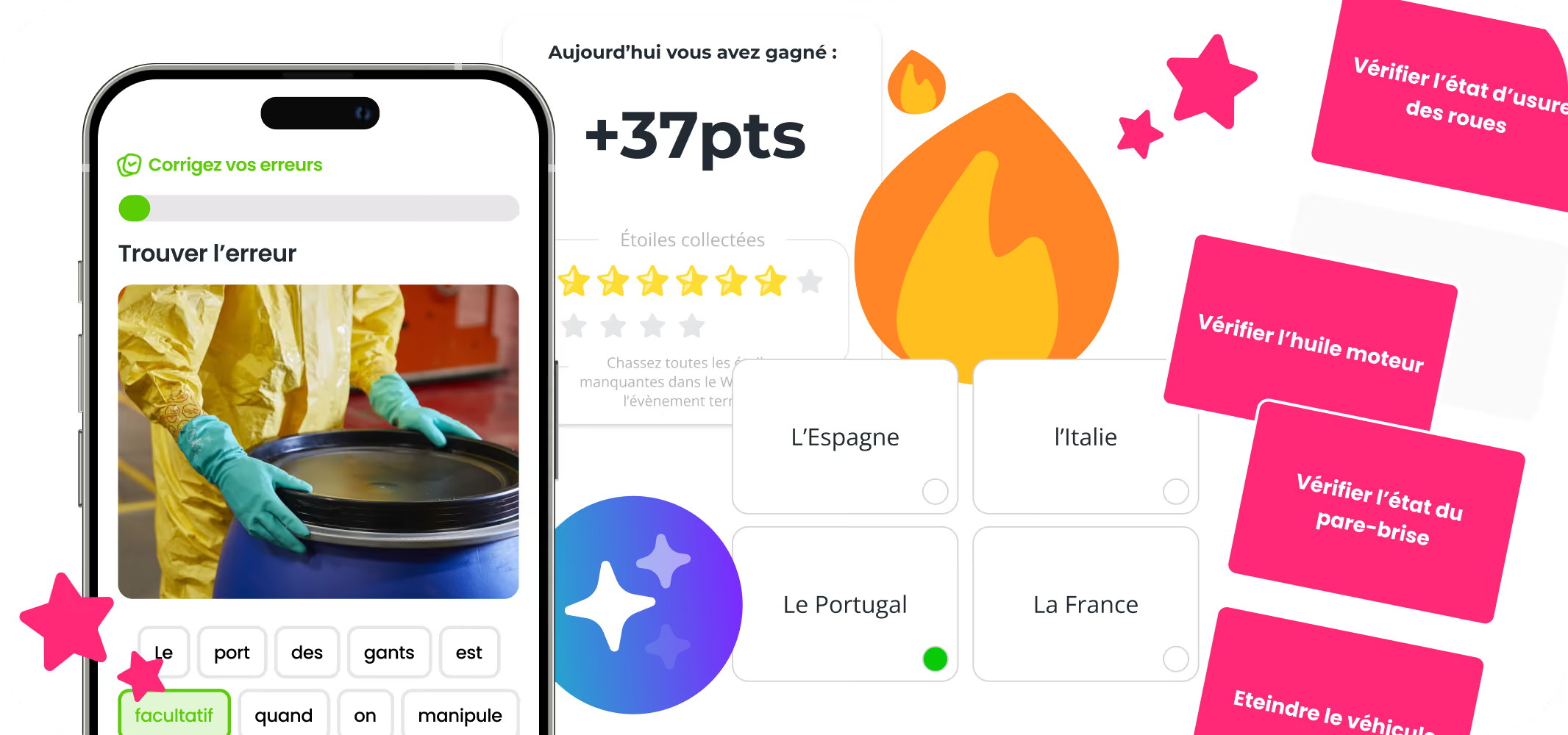
Clear interface, mobile-first logic, light gamification: SPARTED follows the codes of the apps employees use every day. - Fit into your existing ecosystem
SPARTED complements LMSs, HR tools and existing training programs. It does not replace, it activates. - Support a learning culture open to all
By giving every employee, whatever their role, workplace or level, the chance to learn a little every day, SPARTED helps spread a culture of continuous growth at scale. - Use AI for personalization
By analyzing usage and behavior, SPARTED offers dynamic personalization of the experience, adapting content delivery to learners' pace and preferences, with no technical complexity for the administrator. Learn more about SPARTED's AI.
In short, SPARTED does not just follow digital learning trends, it makes them actionable, here and now, in the field.
Frequently asked questions
What are the top digital learning trends for 2026?
The main trends are learning as a daily habit, learner autonomy, consumer-grade UX, AI for personalization and content creation, short formats, social learning, blended learning, learning in the flow of work, impact measurement and learning culture. Together, they point to shorter, more frequent and more measurable training.
How is AI used in digital learning?
AI is used to recommend content suited to each learner, adapt difficulty and timing, and generate training material such as text, quizzes and scenarios. Training teams still define objectives and validate content, since AI assists rather than replaces them.
What is the difference between digital learning and e-learning?
E-learning usually refers to online courses taken on a computer, often in long modules. Digital learning is broader: it covers e-learning, mobile learning, microlearning, virtual classes, social learning and any training delivered through digital tools.
Why is microlearning a key trend?
Microlearning delivers training in modules of a few minutes, which fits the limited time of employees, especially frontline staff. Short, regular sessions are easier to complete and, combined with spaced reminders, help knowledge stick over time.
How do you measure the impact of digital learning?
Go beyond completion rates. Combine engagement data, knowledge retention over several weeks and business indicators linked to the program's goal, such as sales, incident rates or time to productivity.


Need a mobile learning solution?
A simple, fast and engaging solution, up and running in under 2 weeks.
Discover our solutionYour mobile learning platform for 2026
Microlearning, gamification, AI, analytics: SPARTED brings the 2026 trends together in a platform built for frontline teams.
Book a demoGuide How to measure the ROI of your frontline training
Concrete calculations, proven methods and field examples to justify your training investment to leadership.
Read the guide →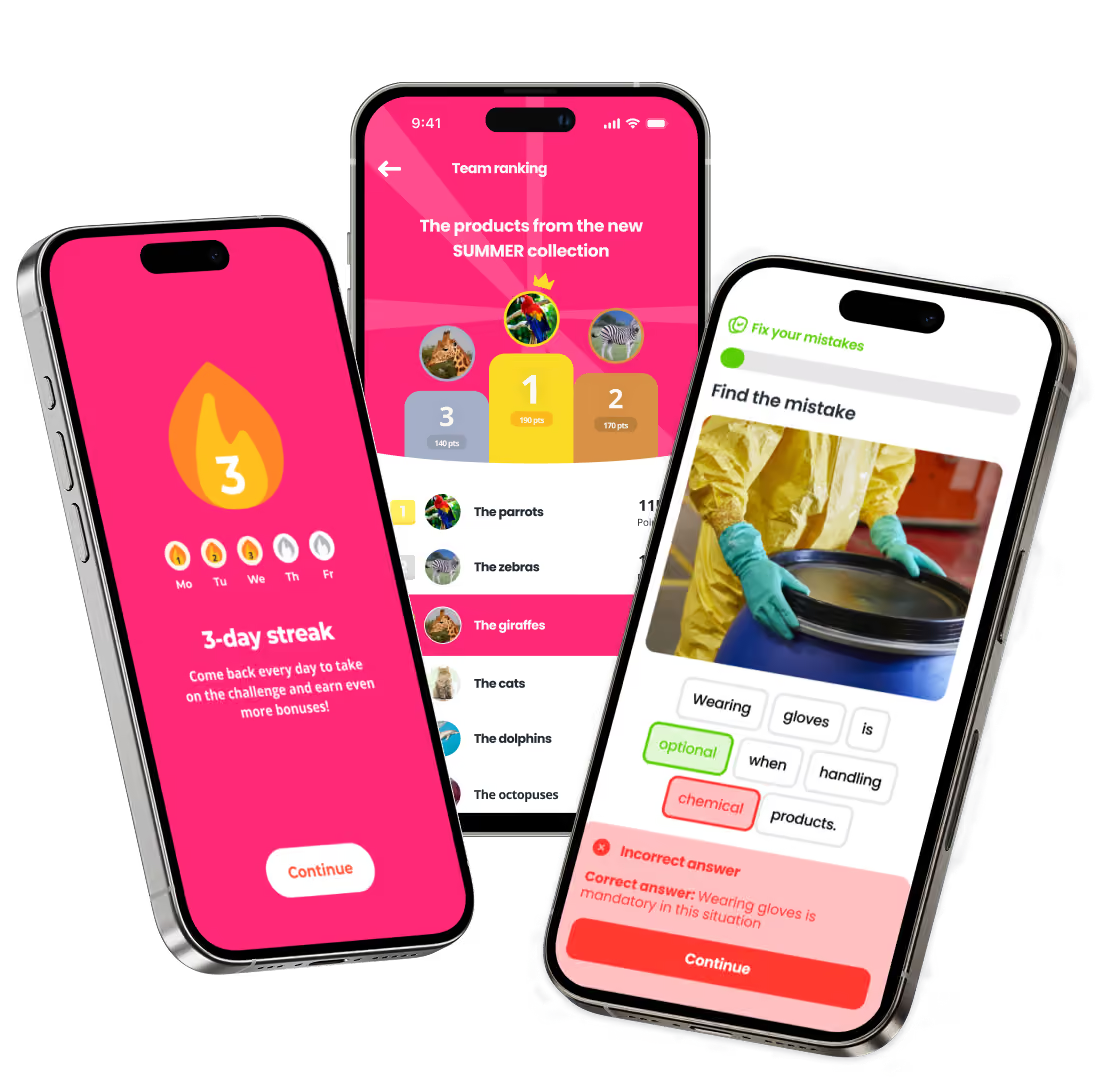
Need a mobile learning solution?
The simple, social and gamified solution, up and running in under 2 weeks.
Discover our solution