


Key takeaways
- AI in training does two main jobs: it personalizes the learning path and it adapts content in real time (difficulty, timing, format).
- Recommendation engines build a dynamic learner profile from activity data such as success rates, time spent and preferred formats.
- Adaptive microlearning sends the right short module at the right moment, which reduces drop-off and supports retention.
- Adaptivity also makes training more inclusive, because pace and format adjust to each learner.
- For companies, the goal shifts from tracking completion to measuring real skill gains.
AI mobile learning is the use of artificial intelligence to personalize and adapt training delivered on smartphones: the system decides which short module each learner sees, when, and at what level of difficulty, based on their results and activity. Paired with microlearning, it turns a fixed course catalog into an individual learning path for every employee, without extra work for the training team.
For a long time, workplace training meant rigid formats with little interaction. It is now moving toward personalized, dynamic paths built around what each person actually needs. AI is becoming a practical way to reconcile business performance with a better learning experience.
Mobile learning plays a strategic role in this shift. It is flexible, short and fits into the workday, which makes it a natural testing ground for AI. This article looks at how AI and mobile learning work together, what they change in practice, and where a microlearning specialist like SPARTED fits in.
How is AI changing workplace training?
AI is changing workplace training by automating what used to require manual effort: recommending content, analyzing performance and adjusting learning paths. It has moved from a futuristic idea to a standard building block of digital learning programs.
A shift driven by recent technology
In just a few years, artificial intelligence has become a core technology in training programs. Generative language models, predictive algorithms and learning analytics platforms have reshaped how training is designed and delivered.
The pace of adoption shows in the wider workforce. According to Gallup (2025), the share of U.S. employees who use AI at work a few times a year or more rose from 21% in 2023 to 45% in the third quarter of 2025. Learning tools are following the same path.
Major LMS platforms now include built-in AI features: automatic content recommendations, real-time performance analysis and smart search. These tools make training smoother and more intuitive, reducing cognitive load for users while making better use of learning time.
This is no longer limited to large, tech-savvy corporations. Small and midsize businesses, franchise networks, public bodies and nonprofits are adopting it too, driven by the need for agility and measurable results. AI is becoming an emerging standard in the architecture of digital learning programs.
What is at stake for companies and learners
Bringing AI into training serves two goals at once: improving how well programs perform and increasing learner engagement.
For companies, the stakes are operational. They need efficient learning paths that match job requirements and produce usable data on the skills employees have acquired. AI makes it possible to manage programs continuously, spot where learners get stuck and adjust content without constant human intervention.
For learners, the benefit is first about experience. AI offers a personalized, more stimulating and less linear learning environment. Long, impersonal modules disconnected from real needs give way to a path where the learner takes ownership of their progress, supported by relevant suggestions, targeted feedback and a pace of their own.
The real potential of AI in training lies at this intersection of efficiency and personalization. It is also what makes some formats especially well suited to it, starting with personalized mobile learning, covered in the next sections.
How does AI personalize learning paths?
AI personalizes learning paths by analyzing each learner's interactions and recommending the content that best fits their level, gaps and goals. Instead of following the same sequence as everyone else, each employee gets the right content at the right time.
Recommendation engines and learner profiles
One of AI's biggest contributions to training is its ability to build truly individual learning paths. By continuously analyzing learner interactions, such as time spent, success rates, reactions and format preferences, platforms can generate a dynamic learner profile that evolves over time.
On that basis, recommendation engines steer each learner toward the most relevant content. The point is no longer to follow a fixed path, but to receive the right content at the right time, based on their pace, gaps, interests and career goals.
This approach, borrowed from e-commerce and streaming, changes the logic of training: a static catalog becomes a living learning experience, personalized and driven by data.
What is learning in the flow of work?
Learning in the flow of work is a continuous sequence of short content pieces matched to what the learner needs right now. Personalization makes it possible. Compared with traditional courses, which are long and sometimes repetitive, this format maximizes relevance and reduces the risk of drop-off.
In practice, AI selects modules that target the skills to strengthen, adjusts difficulty in real time and sends targeted reminders at the right moment. It can also detect dips in attention and restart learning momentum.
The result is an experience that is shorter but denser and more engaging, and that respects the learner's time. This approach encourages active recall, supports long-term knowledge retention and helps key messages stick.
The principle works best in quick, mobile formats such as microlearning. AI multiplies its impact by making learning truly adaptive, responsive and centered on the user.
What is adaptive AI mobile learning?
Adaptive AI mobile learning is mobile training that adjusts itself in real time: the content, its difficulty, its timing and its format change according to each learner's results. It is the step from personalized to intelligent mobile learning.
Smart microlearning: the right content at the right time
Microlearning is a training format built on short, focused content that learners can apply immediately. It is already effective on its own and becomes even more powerful with AI, which turns it into adaptive microlearning that responds to learners' needs in real time.
By analyzing viewing data, success rates and progress history, AI can:
- identify the best moments to learn (for example, at the start of the day, between two meetings or during a commute);
- adjust the difficulty of a module based on past performance;
- prioritize certain content when gaps or job needs are detected;
- suggest personalized sequences to reinforce fragile knowledge.
This smart delivery increases engagement and reduces friction. The learner gets the right message at the right time, which makes mobile learning more effective.
More inclusive learning
One of the major benefits of AI in adaptive learning is its potential for inclusion. By adapting not only the content but also its form, frequency and complexity, AI takes better account of the diversity of learners.
In practice, the system can:
- slow down or speed up a learning path, depending on the learner's level of mastery;
- offer different formats (video, audio, quiz, text) based on individual preferences or accessibility needs;
- detect signs of disengagement (falling activity, repeated errors) to re-engage the learner proactively.
This flexibility creates a fairer experience that is also more effective. It lets organizations reach very different audiences, such as frontline staff, managers, early-career talent and international teams, with a single technology approach.
Mobile learning is already flexible by nature. With AI, it gains a strong personalization lever in service of training that truly works for everyone.
How does SPARTED use AI for personalized mobile learning?
SPARTED already collects the data AI needs, because every training campaign on the app generates detailed activity data. That data is the foundation for recommendations, adaptive pacing and personalized feedback.
An experience built on data
At SPARTED, mobile learning is designed as an immersive, social and engaging experience. Each training campaign produces a wealth of data: progress, completion rates, engagement time, play frequency and more. Used well, this data is a solid base for artificial intelligence features.
Today, SPARTED applies AI and adaptive mechanics in four concrete ways:
- AI content creation: Courses and quiz campaigns generated from your own documents, then reviewed by your team (see how SPARTED's AI creates training content);
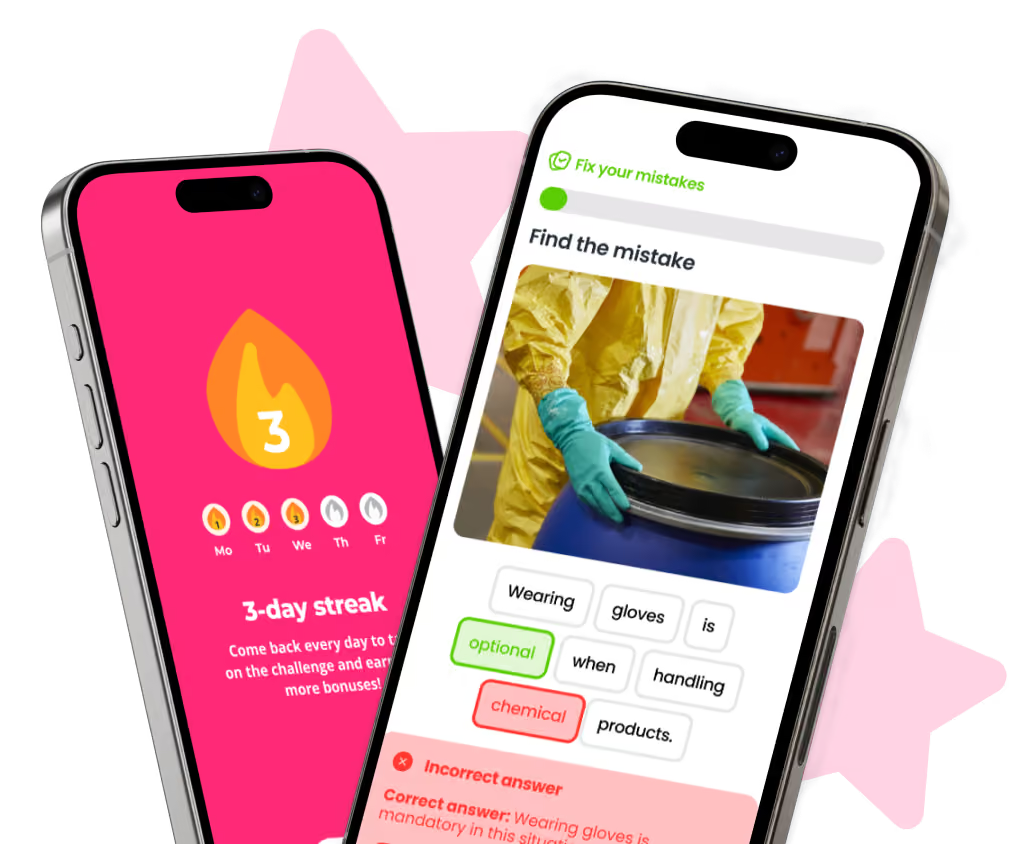
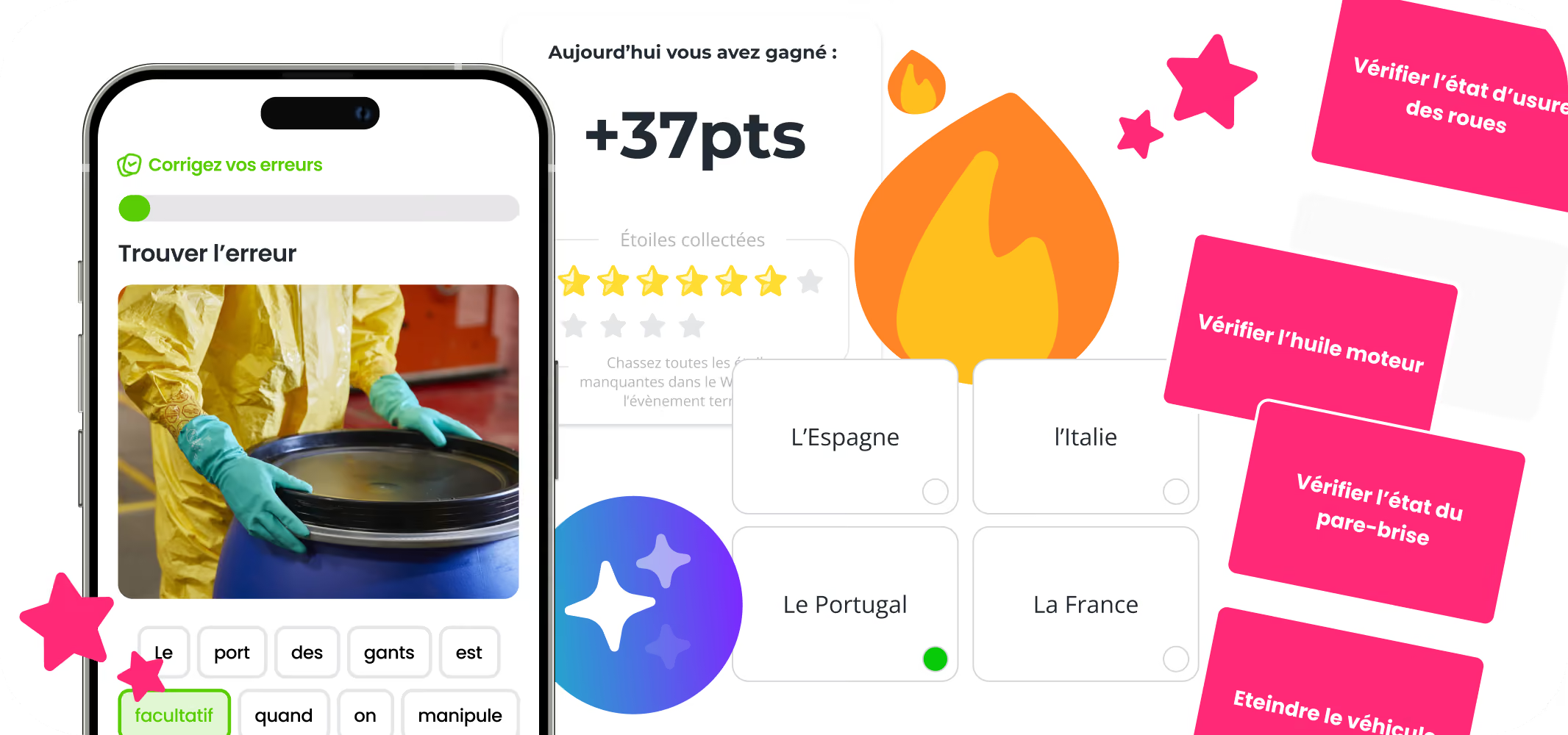
- Adaptive Learning: after each session, learners replay the questions they got wrong until the knowledge sticks;
- analytics: engagement and results by team and by question, so you can adjust the pace and content of campaigns;
- MCP: your teams run the SPARTED Back Office in plain language from the AI they already use (Claude, ChatGPT, Gemini…), for example to turn a procedure into questions and a campaign in a few words (see SPARTED's MCP guide).
This personalization at scale strengthens learning impact, while keeping the playful, mobile approach that is SPARTED's strength.
A results-driven vision of training
SPARTED's value proposition rests on a strong conviction: training works when it creates engagement every day. AI extends that promise by making each session more targeted, more relevant and better suited to learners' work rhythm.
SPARTED offers adaptive campaigns that keep getting richer, where each user follows a unique path based on their results, interactions and skill goals. This makes it possible to:
- improve the performance of frontline teams with highly contextual content;
- manage training not only by completion rates, but by real skill gains;
- increase the value employees see in training, by offering a path that fits them.
By combining SPARTED's core strengths, microlearning, gamification and mobile access, with the adaptive power of AI, the company is well placed to become a pioneer of intelligent mobile learning.
Frequently asked questions
What is AI mobile learning?
AI mobile learning is training delivered on smartphones in which artificial intelligence personalizes and adapts the content. It recommends modules, adjusts difficulty and chooses the timing of reminders based on each learner's results and activity.
How does AI personalize training?
AI analyzes learner data such as success rates, time spent and format preferences to build a dynamic learner profile. A recommendation engine then suggests the most relevant content for each person, instead of the same sequence for everyone.
What is the difference between personalized and adaptive learning?
Personalized learning tailors the path to the individual, for example by recommending content that matches their goals. Adaptive learning goes further and adjusts in real time: difficulty, pace and format change as the learner answers.
Does AI replace trainers in mobile learning?
No. AI automates recommendations, scheduling and part of the analysis, but training teams still define the objectives, validate the content and interpret the results. AI assists the learning designer rather than replacing them.
Why does AI work well with microlearning?
Microlearning breaks training into short, independent modules, which gives AI many small units it can reorder, repeat or skip. That makes it easy to send each learner the right module at the right moment, which is harder with long courses.


Need a mobile learning solution?
A simple, fast and engaging solution, up and running in under 2 weeks.
Discover our solutionSee adaptive mobile learning in action
SPARTED adapts training to each learner's results, with short mobile modules your frontline teams actually complete.
Book a demoGuide How to measure the ROI of your frontline training
Concrete calculations, proven methods and field examples to justify your training investment to leadership.
Read the guide →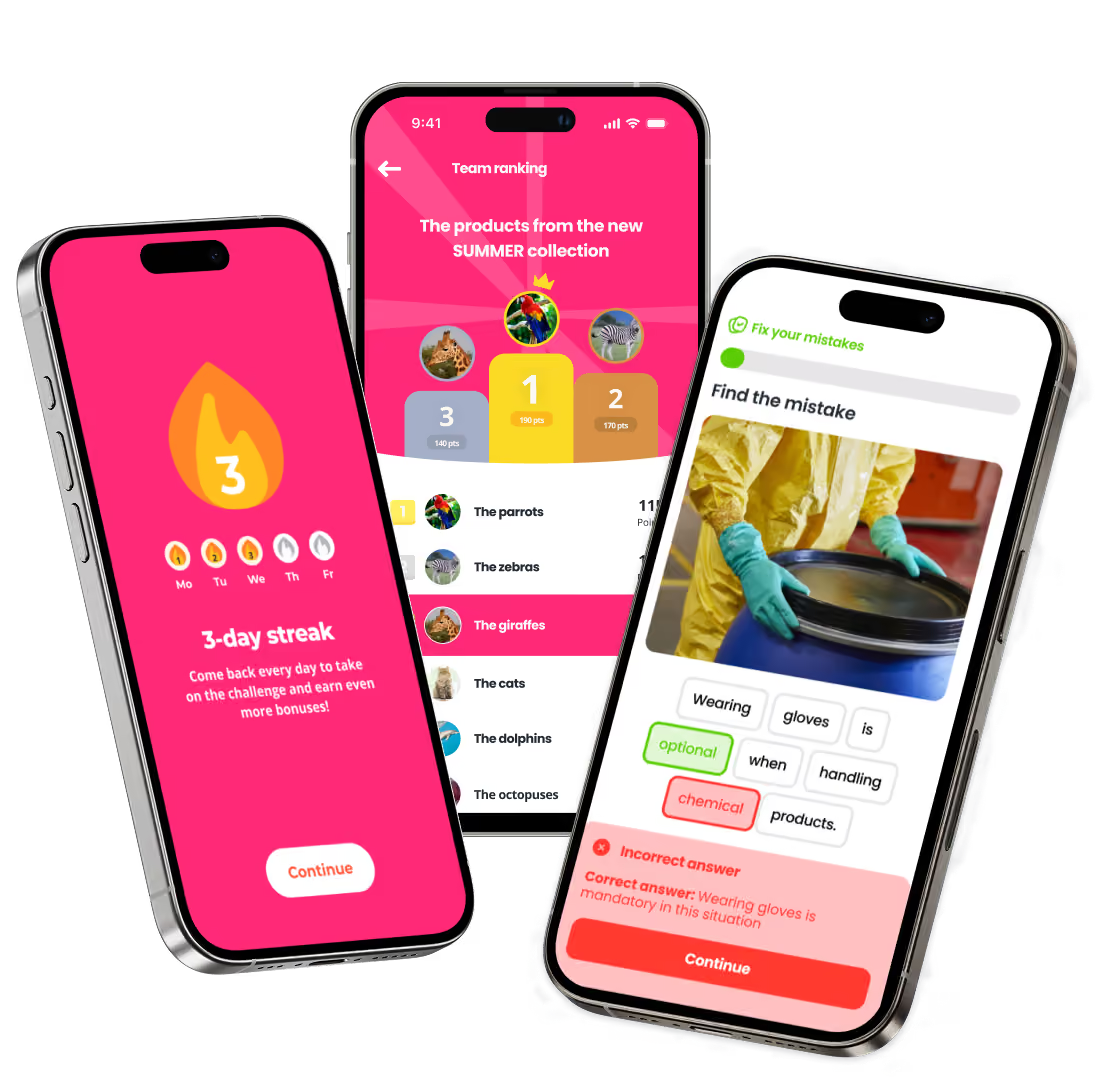
Need a mobile learning solution?
The simple, social and gamified solution, up and running in under 2 weeks.
Discover our solution