






An LMS alone rarely meets the needs of frontline teams: it is built for structured, desktop-based courses, while frontline employees need short, mobile and engaging formats they can use between tasks. The most effective setup pairs the LMS, for compliance and tracking, with mobile microlearning for daily reinforcement.
The scale of the gap is significant. According to Microsoft's Work Trend Index research (2022), the 2 billion frontline workers worldwide represent 80% of the global workforce, and 55% of them say they have had to learn new technology on the fly, with no formal training.
Between tight schedules, travel and the operational environment, frontline teams have neither the time nor the mental bandwidth to work through long online modules. The result is low engagement, low completion and, in the end, low impact.
This does not call the value of the LMS into question, but it reveals its limits. Training a store associate or a field technician takes a complementary approach, more agile and designed around their daily reality. This is where mobile microlearning comes in, as a way to activate training rather than a replacement.
Key takeaways
- An LMS (Learning Management System) centralizes, structures and tracks training, but is designed for desktop, seated learning.
- Frontline workers are 80% of the global workforce (Microsoft, 2022) and often learn on the fly without formal training.
- Frontline teams need mobile access, short interactive formats and visible recognition.
- Mobile microlearning complements the LMS: the LMS certifies, microlearning keeps knowledge active day to day.
The LMS: a solid foundation, but sometimes out of touch with the field
The LMS is a strong tool for HR and compliance, but its format assumes time at a computer that frontline employees rarely have. That mismatch, not the tool itself, explains low completion in the field.
What does an LMS do well?
A Learning Management System (LMS) is software that centralizes training content, structures learning paths and tracks learner progress. For HR and L&D teams, it is a dashboard that supports regulatory compliance, consistent messaging and visibility into the skills being developed.
It is also a tool for standardization, especially in large multi-site organizations: e-learning modules are available to every employee, wherever they work. The LMS checks many boxes for a training strategy: it reassures, it structures, it sets the framework.
A gap with frontline teams' daily reality
This efficiency runs into a different reality in the field. In a store, on a construction site or on a sales route, the time available to log in to an LMS is next to none. When an employee does try, they often face long, unintuitive courses designed for a computer.
The LMS format itself is not built for mobility. It assumes a seated, focused learning posture that rarely fits the pace of operational teams. Many employees do not finish the modules, or never start them. It is not that they do not want to learn; the setup simply does not fit their work.
A top-down approach that fails to engage
Another point of friction is the way content is delivered through the LMS. Most of the time, it is pushed by management or the training department, with little personalization and no consideration for each employee's context. The experience is one-way and sometimes seen as an administrative chore.
This model, inherited from classroom training, lacks agility and engagement. In the field, people learn better when they see the immediate benefit, when the format is dynamic, and when they want to come back.
What do frontline teams need from training?
Frontline teams need three things from training: mobile access in short moments, interactive formats that hold attention, and recognition for their efforts. Any learning tool for the field should be judged on these criteria.
Learning on the move
Frontline employees' days are fast-paced, fragmented and often unpredictable. A sales associate may have ten minutes between two customers. A delivery driver waits a few moments between two rounds. A technician wraps up one job before heading to the next. These micro-moments are where learning can fit into their day.
For that to happen, the format has to be right. Opening a computer, navigating an LMS, logging in to an intranet is often too long or simply impossible. These teams want fast access on a device they always have on hand: their smartphone. For them, mobile is the main channel, not a secondary one.
Short, interactive formats to capture attention
Even with a few minutes available, the content still has to make people want to engage. Frontline teams will not sit through 30-minute modules in narrated slide format. They expect formats that are short, fun and accessible in a few taps, with useful information they can act on immediately.
Interactivity is the key. Answering a question, getting feedback, competing with colleagues: this is what captures attention and supports retention. By combining brevity, gamification and repetition, microlearning is naturally suited to these habits.
Recognition that keeps people motivated
Often underestimated, frontline teams need recognition for their learning efforts. They want to know that what they do matters and is visible. Completing a module alone, with no feedback, gives them no reason to come back.
That is why engagement mechanics matter. Leaderboards, badges, daily challenges, and personalized encouragement turn training into a motivating experience. The more engaged learners are, the more they come back, and the more they learn.
Mobile microlearning: the essential complement to your LMS for frontline teams
Mobile microlearning complements the LMS rather than replacing it: the LMS structures and certifies, while microlearning delivers short daily content on the smartphone to keep knowledge active. Together, they cover both compliance and field adoption.
LMS vs mobile microlearning: what is the difference?
Mobile microlearning is a training format that delivers short sessions of a few minutes on a smartphone, often with quizzes and game mechanics. The point is not to pit it against the LMS, because the two tools serve different purposes. The LMS structures, archives and certifies. Microlearning activates, engages and keeps knowledge alive day to day.
| Criteria | LMS | Mobile microlearning |
|---|---|---|
| Main role | Structure, archive and certify training | Reinforce and apply knowledge day to day |
| Typical format | Modules of 20 to 60 minutes | Sessions of a few minutes |
| Device | Mostly computer | Smartphone |
| Engagement levers | Assignments and deadlines | Gamification, challenges, Leaderboards |
| Best for | Compliance, certification, long courses | Frontline teams, product updates, reminders |
An e-learning course can lay the foundations of a skill, while microlearning reinforces it through regular reminders, short real-life scenarios or quizzes. This combination is what turns training into an operational lever rather than an administrative ritual.
The SPARTED case: making learning daily and engaging
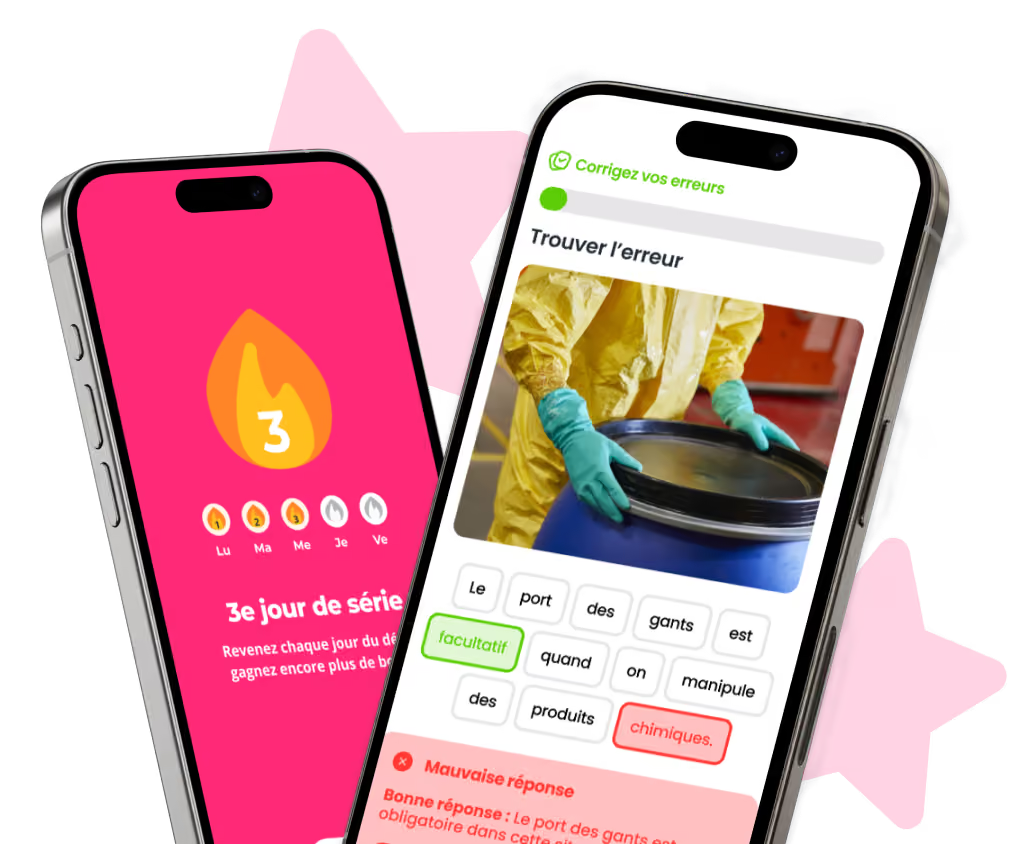
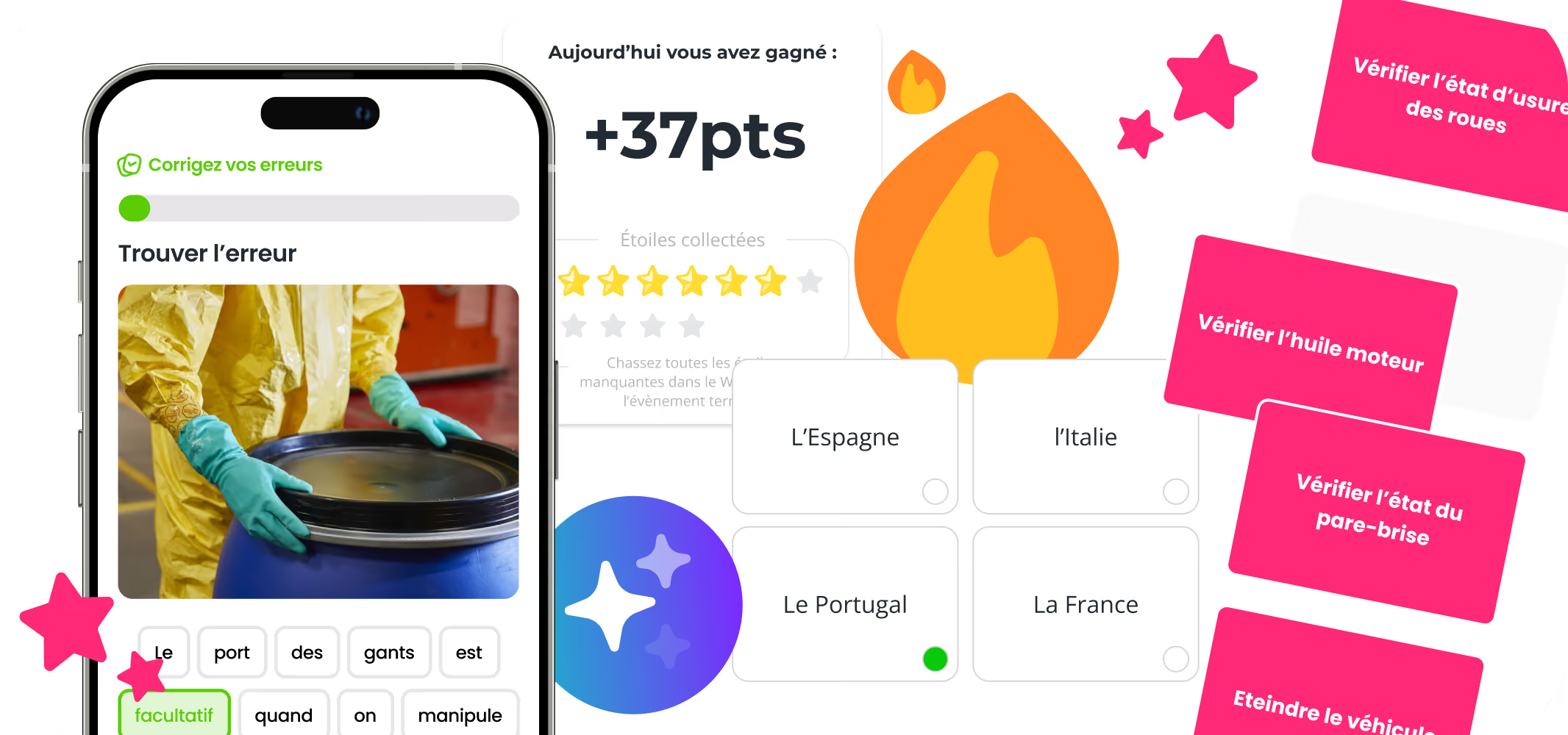
This is the thinking behind the mobile microlearning platform SPARTED has built. Designed mobile-first, it fits into frontline teams' daily routine without disrupting their pace. Every day, employees receive short, personalized content in the form of challenges they can complete in a few minutes.
The interface is gamified and intuitive. Content is contextualized to each team's job, easy to consume and easy to remember. Rather than a top-down approach, SPARTED creates a continuous engagement loop between the employee and the company.
A measurable impact on engagement and performance
The effect of mobile microlearning can be measured. Usage data collected through SPARTED shows user engagement precisely, along with knowledge progression and the impact on operational performance. These indicators give managers and HR a clear, actionable view.
Companies typically use this data to follow retention, the consistency of sales messaging or the time new hires take to become autonomous. It is not a matter of replacing technology, but of strategic complementarity. Where the LMS maps out a path, SPARTED brings the learning experience into the field.
Frequently asked questions
Is an LMS suitable for frontline workers?
An LMS works for frontline workers for compliance, certification and tracking, but it is rarely enough on its own. Its long, desktop-oriented modules do not fit fragmented work days. Most organizations get better adoption by adding a mobile-first learning layer.
What is the best way to train frontline employees?
Short, mobile, interactive sessions delivered regularly work best for frontline employees. Microlearning on the smartphone, combined with spaced reminders, gamification and content tied to real job situations, fits the few minutes they have between tasks.
Should mobile microlearning replace the LMS?
No. In most organizations the two are complementary. The LMS remains the system of record for mandatory training and certification, while mobile microlearning drives daily engagement and reinforcement in the field.
How many frontline workers are there?
According to Microsoft's Work Trend Index research published in 2022, there are about 2 billion frontline workers worldwide, or 80% of the global workforce. They work in sectors such as retail, manufacturing, healthcare, hospitality and logistics.


Need a mobile learning solution?
A simple, fast and engaging solution, up and running in under 2 weeks.
Discover our solutionTraining built for frontline teams
Mobile-first, 3 minutes a day, no desk required. See how SPARTED reaches every team member.
Book a demoGuide How to measure the ROI of your frontline training
Concrete calculations, proven methods and field examples to justify your training investment to leadership.
Read the guide →Need a mobile learning solution?
The simple, social and gamified solution, up and running in under 2 weeks.
Discover our solution