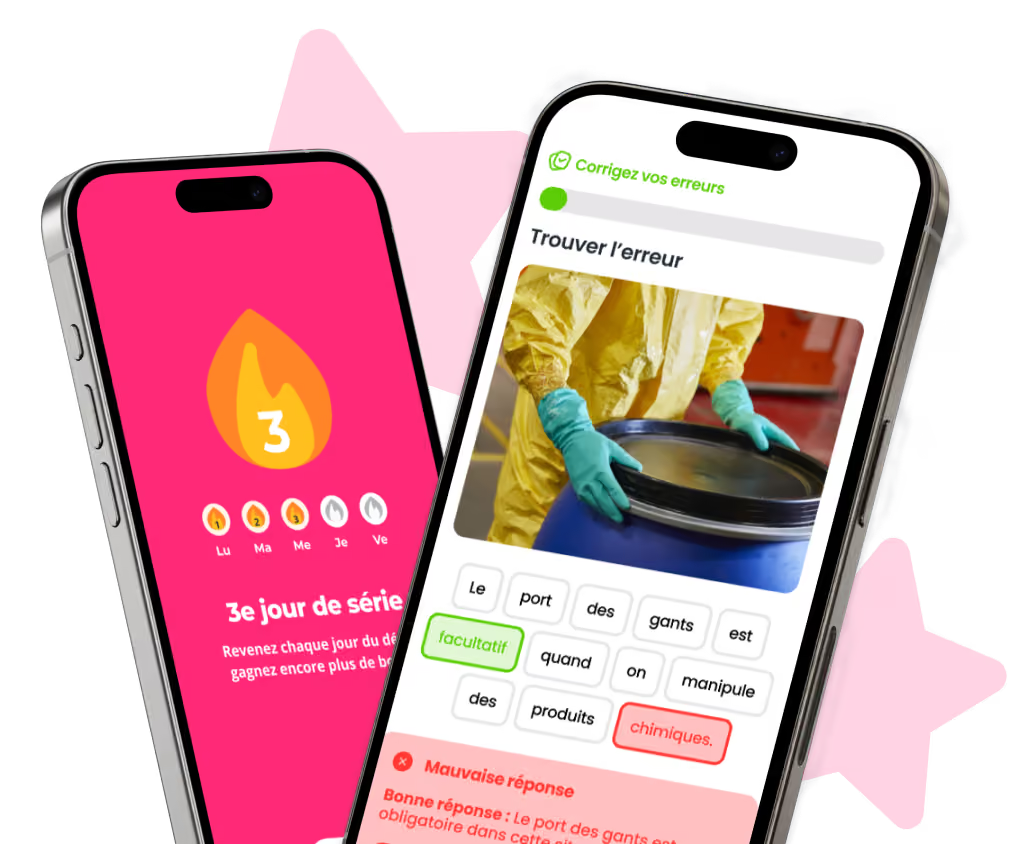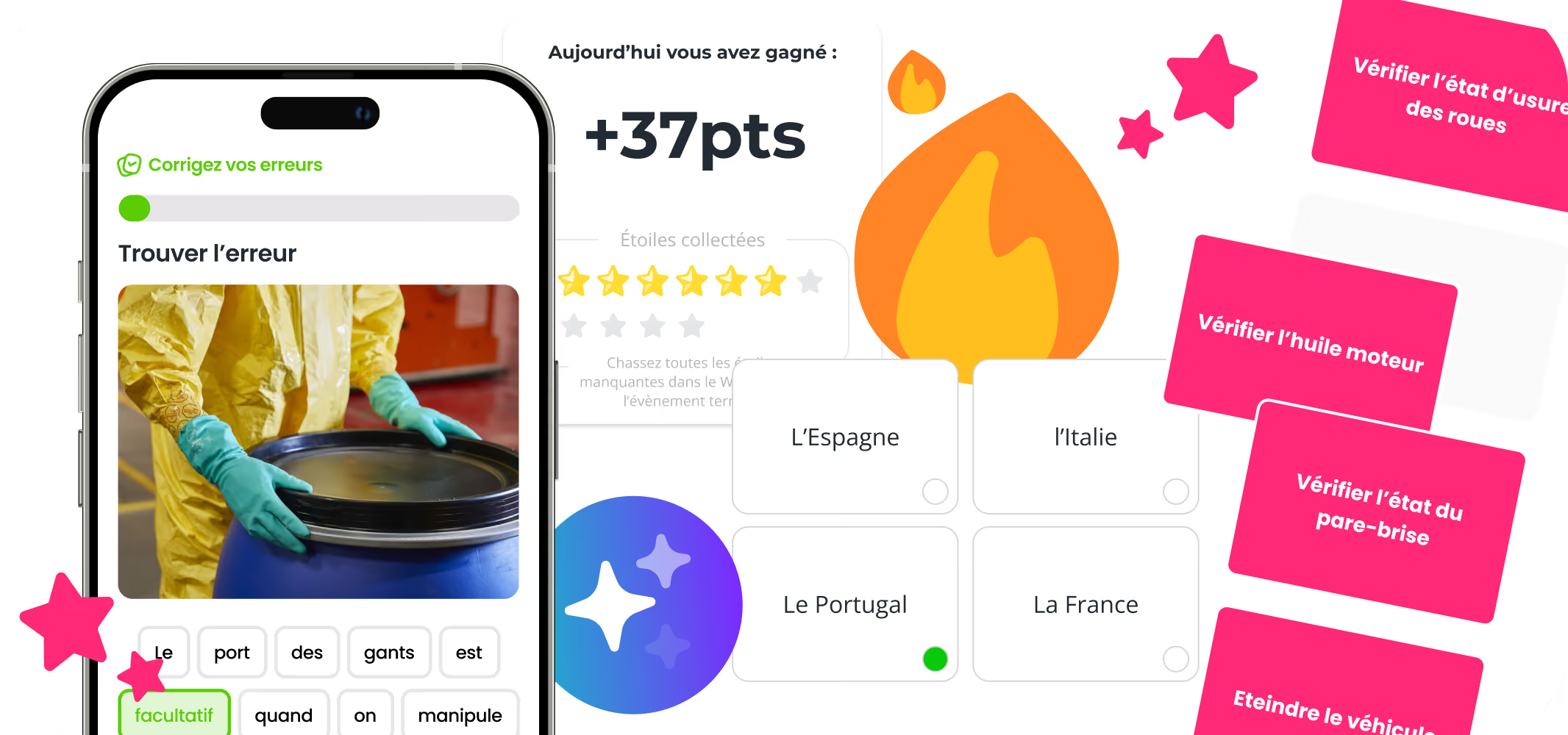








An LMS alternative is a learning platform, usually mobile and built on microlearning, that companies use alongside or instead of a traditional learning management system to keep employees engaged and learning continuously. In most cases it does not replace the LMS: the LMS keeps handling administration and compliance, while the alternative takes over daily engagement and knowledge retention.
For a long time, the LMS was the cornerstone of digital learning in the enterprise. Catalog management, course tracking, completion records: these platforms made it possible to run online training at scale. The question today is different. Can you really engage employees with long modules, taken once in a while, usually on a computer? And do these formats help people retain knowledge over time?
An LMS does a very good job of administration and compliance. When it comes to building learning habits, holding attention and making knowledge stick, the results are less convincing. That gap is what the LMS alternative is meant to fill.
Key takeaways
- An LMS (learning management system) is built to administer training: enroll learners, deliver courses, track completion and prove compliance.
- Its limits show up in engagement, continuous learning and access for frontline employees who rarely work at a computer.
- An LMS alternative relies on short, regular, mobile sessions (microlearning) to keep knowledge active day to day.
- Most companies combine both: the LMS for structure and compliance, the alternative for engagement and retention.
What is an LMS, and what was it built for?
An LMS is software that hosts, assigns and tracks training in a company. It was built to manage training, not primarily to make people learn, and that original purpose explains most of its limits today.
A platform designed to manage training
The LMS was originally designed to meet a specific need: structuring and administering training in the enterprise. These platforms centralize content, enroll learners, track completions and produce compliance reports.
In many industries, these features remain indispensable. Companies must prove that their employees have completed mandatory training, whether regulatory, technical or safety-related. The LMS plays a key role in oversight and traceability.
This administrative logic has also shaped the learning experience. The main goal becomes completion, sometimes more than actually absorbing the knowledge.
A model based on one-off training
Most LMSs are built around an event-based logic: a module is assigned, the learner completes it, then moves on.
Learning does not work that way. As the forgetting curve described by Hermann Ebbinghaus shows, knowledge erodes quickly when it is not reactivated. Without regular reminders, much of what was covered in a module fades within a few weeks.
Yet LMSs were rarely designed to sustain continuous learning. They are effective at delivering training, less so at keeping knowledge active day to day.
Limits when it comes to engaging frontline teams
These limits become even more visible with frontline teams. According to Emergence Capital (2020), about 80% of the global workforce, or 2.7 billion people, is deskless: they do not spend most of their working time at a desk.
These employees rarely have long stretches of time at a computer. Long courses feel like a burden, and people rush through them to check a box.
This is exactly where companies start looking for an LMS alternative. Not to abandon these platforms, but to complement them with formats that are shorter, more accessible and better suited to the realities of the field.
Why are companies looking for an LMS alternative today?
Companies look for an LMS alternative for three reasons: low learner engagement, the need for continuous rather than one-off learning, and the shift of employees' habits toward mobile and short content.
The learner engagement challenge
Engagement is one of the main limits of traditional LMSs. In many organizations, employees complete the modules assigned to them without real involvement. They click through the steps, finish the course and quickly move on.
This is not necessarily a content problem. It is often a format problem. Long modules, taken once in a while, struggle to hold attention over time. Learning becomes a task to get done rather than an active process.
The need for continuous learning
Products change, procedures are updated, practices shift. Training people once is no longer enough to keep their skills current.
Organizations are realizing that learning has to be sustained over time. It is no longer just about training, but about keeping knowledge active. This calls into question the traditional LMS model, centered on one-off training, and pushes companies toward solutions that build regular learning into daily work.
The shift toward mobile and microlearning
The phone has become the default screen. According to the Pew Research Center, 91% of U.S. adults owned a smartphone in 2025, and employees use mobile apps and short content constantly in their personal lives.
These habits naturally shape their expectations for training. Employees expect the same simplicity and the same accessibility.
Microlearning is a training format that breaks content into sessions of a few minutes. Combined with mobile learning, it makes it possible to reactivate knowledge regularly without long training sessions. This is where the idea of an LMS alternative really makes sense: complementing existing setups with formats that fit the real rhythm of work.
What does a next-generation learning platform look like?
A next-generation learning platform delivers short, regular and interactive content on mobile, fits into the workday and complements the LMS rather than replacing it. The table below summarizes the differences.
| Criterion | Traditional LMS | LMS alternative (mobile microlearning) |
|---|---|---|
| Main purpose | Administer, assign and track training | Engage learners and keep knowledge active |
| Format | Long modules, taken once in a while | Sessions of a few minutes, repeated regularly |
| Main device | Computer | Smartphone |
| Key metric | Completion rate | Participation and knowledge retention over time |
| Best fit | Compliance, certification, structured courses | Frontline teams, product updates, safety reflexes |
Short formats to build learning habits
Rather than offering long, one-off modules, these platforms favor short, regular and interactive content. This approach draws directly on the most effective learning mechanisms.
A few minutes of content at regular intervals reactivates knowledge, checks understanding and gradually strengthens retention.
Microlearning does not aim to replace structured training. It aims to maintain skills over time, by building a learning habit that fits the pace of work.
Training built into the workday
Instead of blocking out an hour for a full module, employees learn in a few minutes, between two tasks or at the start of their shift. Frontline teams, often far from a computer, can access content more easily. Learning becomes smoother and more accessible.
Does an LMS alternative replace the LMS?
Usually not. In most cases, these platforms complement the learning ecosystem rather than replace it.
The LMS continues to handle structured courses, compliance and the tracking of mandatory training. Microlearning platforms focus on engagement, repetition and knowledge retention.
This lets companies combine the strengths of both: the administrative rigor of the LMS and the learning effectiveness of shorter, more regular formats.
Frequently asked questions
What is an alternative to an LMS?
The most common alternative to a traditional LMS is a mobile microlearning platform, which delivers short, frequent sessions on employees' phones. An LXP (learning experience platform), focused on content discovery, is another option. Both usually run alongside an LMS.
What is the difference between an LMS and a microlearning platform?
An LMS is designed to administer training: assign courses, track completion and report on compliance. A microlearning platform is designed to make people learn and remember, through short sessions repeated over time.
Can you replace your LMS with a mobile learning app?
Some companies with mostly frontline teams and few compliance requirements do. Most organizations keep the LMS for mandatory and certification training and add a mobile app for daily engagement.
What is an example of an LMS alternative?
SPARTED is one example: a mobile learning platform that delivers training in a few minutes a day, with gamification, Adaptive Learning and analytics, often used on top of an existing LMS for frontline teams.


Need a mobile learning solution?
A simple, fast and engaging solution, up and running in under 2 weeks.
Discover our solutionA lighter alternative to your LMS
Mobile, gamified and built for frontline teams. See how SPARTED complements or replaces your LMS.
Book a demoGuide How to measure the ROI of your frontline training
Concrete calculations, proven methods and field examples to justify your training investment to leadership.
Read the guide →Need a mobile learning solution?
The simple, social and gamified solution, up and running in under 2 weeks.
Discover our solution