






In the mobile learning vs LMS comparison, the two tools solve different problems: a traditional LMS (learning management system) hosts, assigns and tracks formal training, mostly on a computer, while mobile learning delivers short daily sessions on employees' phones. The LMS is the better fit for compliance and certification programs; mobile learning wins on engagement and frontline adoption, and many companies combine both.
So the real question is which one meets your need: delivering certification courses, or engaging frontline teams every day in small doses. This comparison reviews both against the criteria that matter.
Key takeaways
- An LMS is built for administration: catalogs, enrollments, completion tracking and compliance reporting.
- Mobile learning is built for engagement: sessions of a few minutes a day, on the phone, often gamified.
- The biggest gaps are in engagement, frontline adoption and how fast content can be updated.
- Most organizations keep the LMS for compliance and add mobile learning for daily engagement.
Understanding the LMS and mobile learning
The LMS and mobile learning start from opposite assumptions: the LMS expects the learner to come to the training, mobile learning brings the training to the learner.
What is a traditional LMS?
An LMS (Learning Management System) is a platform designed to host, deliver and track online training.
It is the long-standing tool of corporate digital learning, and it does some things very well: centralizing a catalog, managing certification programs, tracking mandatory compliance training, and administering large numbers of learners.
Its model often relies on long, structured modules accessed from a computer. That makes sense for regulatory training, degree programs or dense content that requires time and focus.
Where it reaches its limits is long-term engagement: an LMS assumes that employees will come to the training, while many frontline teams never open the platform on their own.
What is mobile learning?
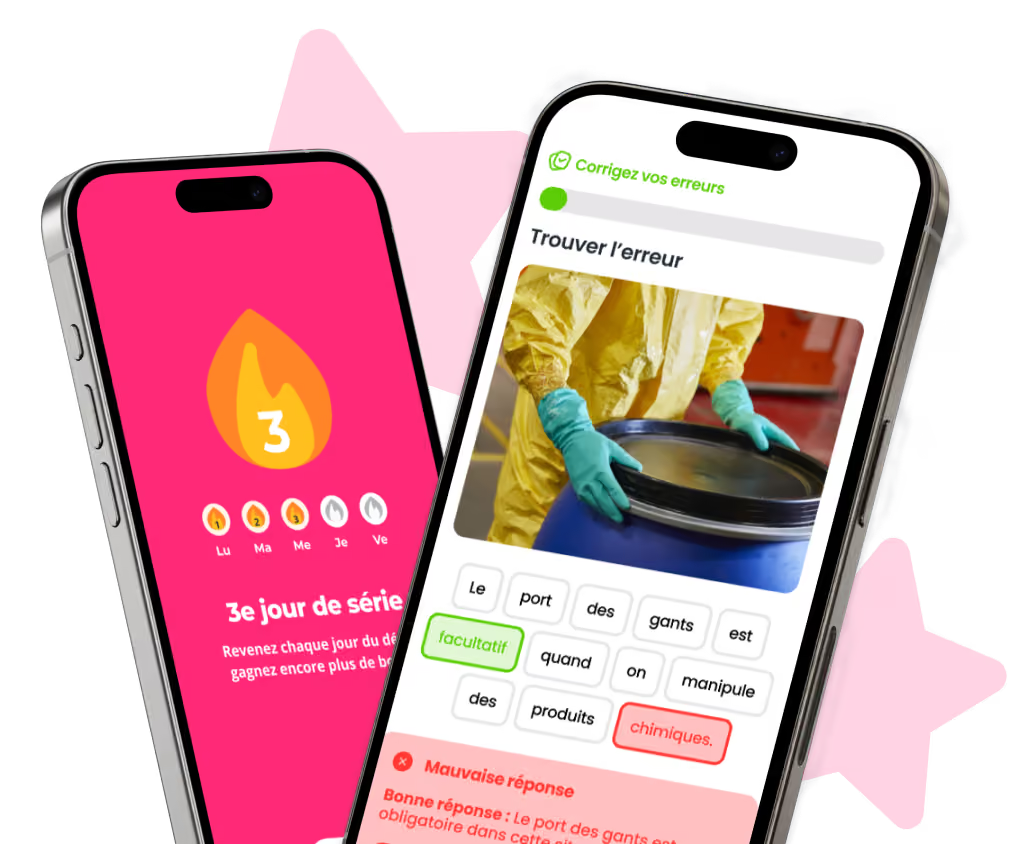
Mobile learning is a training approach that delivers content on employees' smartphones, in sessions of a few minutes a day. It is also called microlearning, because the content is broken down into very short sessions that are easy to fit into a busy day.
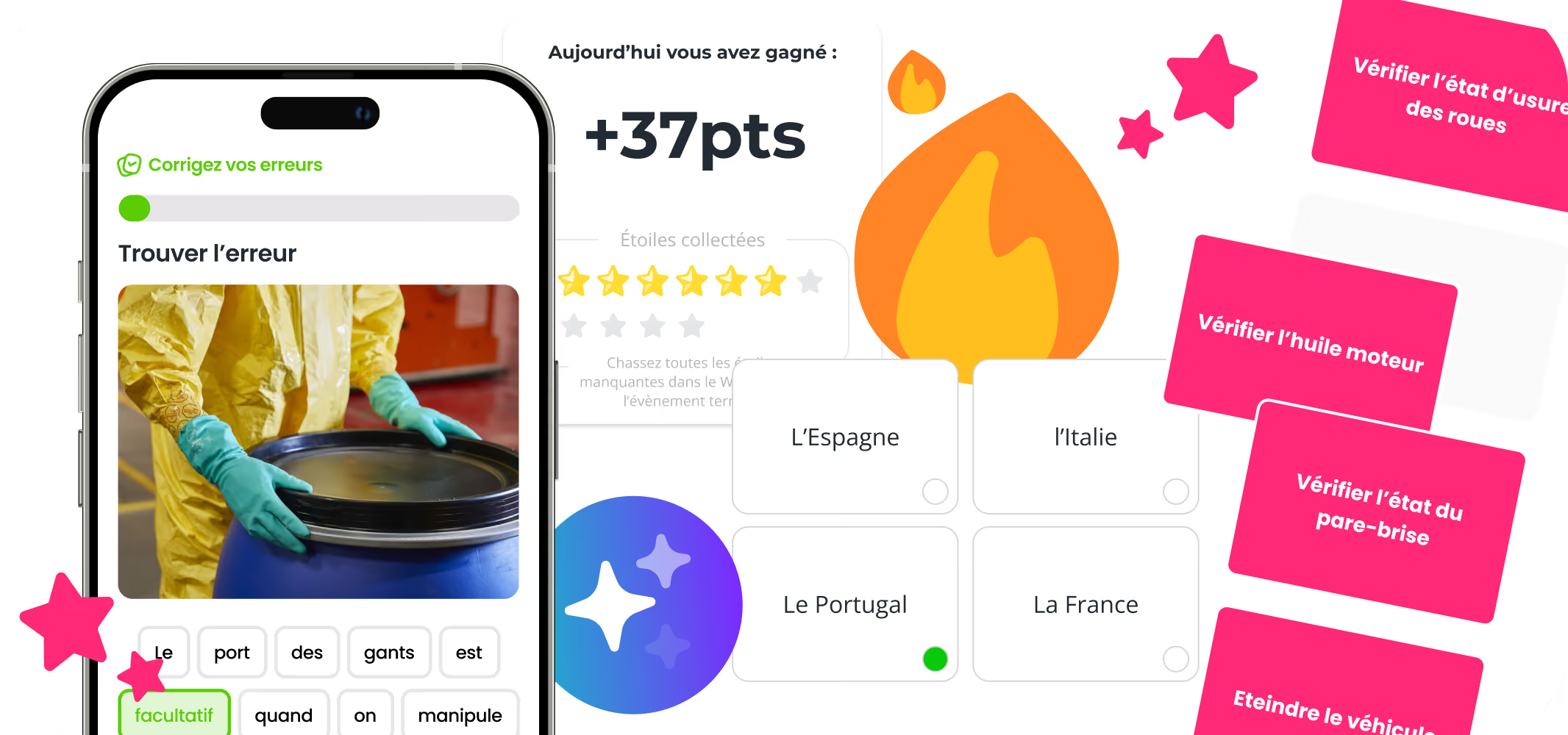
The idea isn't to relearn everything at once, but to build a regular ritual: a few questions in the morning, a key fact to remember, a product update, a safety reflex. When the experience is gamified and social, as with a mobile learning platform, learning becomes something people look forward to rather than a chore. It is particularly effective for sales, retail, field and safety teams, who rarely sit in front of a computer.
Mobile learning vs LMS: how do they compare?
The LMS leads on structure, certification and compliance tracking. Mobile learning leads on engagement, frontline adoption, update speed and the social dimension of learning.
Here is an overview of the two approaches.
| Criterion | Traditional LMS | Mobile learning |
|---|---|---|
| Content format | Long, structured modules | Short sessions, 3 minutes a day |
| Main device | Computer | Mobile, in the employee's pocket |
| Ideal use case | Certification programs, compliance | Frontline, sales and retail teams |
| Learning logic | The learner comes to the training | The training comes to the learner |
| Engagement | Variable, depends on motivation | High, daily gamified ritual |
| Deployment | Often long and technical | Fast, immediate adoption |
| Content updates | Heavy, campaign by campaign | Continuous, in real time |
| Social dimension | Limited | Strong: Battles, Leaderboards, Breaking News |
Which one drives more engagement?
Engagement is the criterion that sets the two approaches furthest apart. An LMS often measures completion: how many people finished the module. Mobile learning aims for long-term engagement: how many come back every day, how many progress, how many share.
The difference comes from the experience. When you turn training into a short, regular ritual, with games, team leaderboards and challenges, you create motivation.
Employees open the app because they want to beat a colleague or keep their streak going, not because they are required to. That is the whole logic of the microlearning approach: small, frequent doses that build the right reflexes better than a single training session that is quickly forgotten.
Frontline adoption
Great content is useless if nobody looks at it. This is often the Achilles' heel of training projects: the platform exists, but teams don't log in.
The audience is large. According to Emergence Capital (2020), about 80% of the global workforce, or 2.7 billion people, is deskless. Nearly all of them carry a phone: the Pew Research Center reports that 91% of U.S. adults owned a smartphone in 2025.
Mobile learning has a structural advantage here. The tool is on the phone, accessible anywhere, with no login friction.
A notification, an important update shared at the right time, and the employee is in within seconds. For frontline or sales teams, it is often the only way to reach people who will never sit down in front of an hour-long e-learning module.
Deployment and updates
A traditional LMS generally requires a full project: integration, catalog structuring, administrator training. That is justified when you manage complex programs over the long term.
Mobile learning prioritizes speed. Deployment is fast, learners get started immediately, and content is updated continuously.
A new product, a safety instruction or internal news is shared in real time through formats such as Breaking News, without relaunching an entire campaign. Teams stay aligned with today's information, not with what was true six months ago.
How do you measure results with each?
Both approaches offer analytics, but they don't look at the same things. The LMS mainly tracks progress and compliance. A mobile learning platform tracks live engagement: daily participation rate, progress by team, best-mastered topics, areas to reinforce, social dynamics between groups.
This level of detail lets you manage training differently. You no longer measure only whether the training was completed, but whether it has really taken hold in the field, team by team.
Combining both: the SPARTED complementarity
You don't have to choose: the most common setup keeps the LMS as the regulatory foundation and adds mobile learning to keep training alive every day.
Do you really have to choose?
Not necessarily. Mobile learning and the LMS don't play exactly the same role. The LMS remains relevant for certification programs, regulatory compliance and long-form content. Mobile learning excels where the LMS struggles: daily engagement, frontline adoption and continuous information sharing.
If your main goal is to engage your teams over time and build the right reflexes, the mobile approach is what will make the difference.
Where does SPARTED fit in?
SPARTED is a mobile learning platform designed to engage teams in just 3 minutes a day. The approach combines a gamified, social mobile app, a Back Office to manage campaigns and content, and analytics focused on real engagement.
In practice, SPARTED isn't yet another LMS, and it isn't meant to replace one. It is a complementary solution that takes over where the LMS stops: getting people to open the app every day, creating short learning rituals, engaging teams through games and sharing the right information at the right time.
Many of our customers keep their LMS for the regulatory foundation and certification programs, and use SPARTED on top of it to keep training alive every day and engage frontline teams. The LMS provides structure, SPARTED drives engagement.
Whether it is for sales performance, safety, onboarding or supporting transformation, the goal stays the same: making training simpler, more engaging and more useful in the field.
Frequently asked questions
What is the difference between an LMS and mobile learning?
An LMS is a platform for hosting, assigning and tracking training, usually through long modules on a computer. Mobile learning delivers short sessions on smartphones, designed to be done in a few minutes a day.
Is mobile learning better than an LMS?
Neither is better in absolute terms. Mobile learning is usually more effective for frontline, retail and field teams who rarely use a computer. An LMS remains the right tool for certification programs and compliance tracking.
Can mobile learning replace an LMS?
Some organizations with mostly frontline staff and light compliance needs do. Most keep the LMS for mandatory training records and run mobile learning on top of it, the most common setup.
Want to see what it looks like with your teams? Discover the SPARTED platform or request a demo.


Need a mobile learning solution?
A simple, fast and engaging solution, up and running in under 2 weeks.
Discover our solutionMobile learning to complement your LMS
See how SPARTED engages your frontline teams where the LMS stops.
Book a demoGuide How to measure the ROI of your frontline training
Concrete calculations, proven methods and field examples to justify your training investment to leadership.
Read the guide →Need a mobile learning solution?
The simple, social and gamified solution, up and running in under 2 weeks.
Discover our solution