



Key takeaways
- LXP stands for learning experience platform, a term coined by industry analyst Josh Bersin.
- An LXP puts the learner at the center: personalized recommendations, short formats, social learning and mobile access.
- An LMS manages and tracks training; an LXP focuses on engagement and the learning experience. Many companies use both.
- Typical LXP learning methods include social learning, mobile learning, Adaptive Learning, gamification and blended learning.
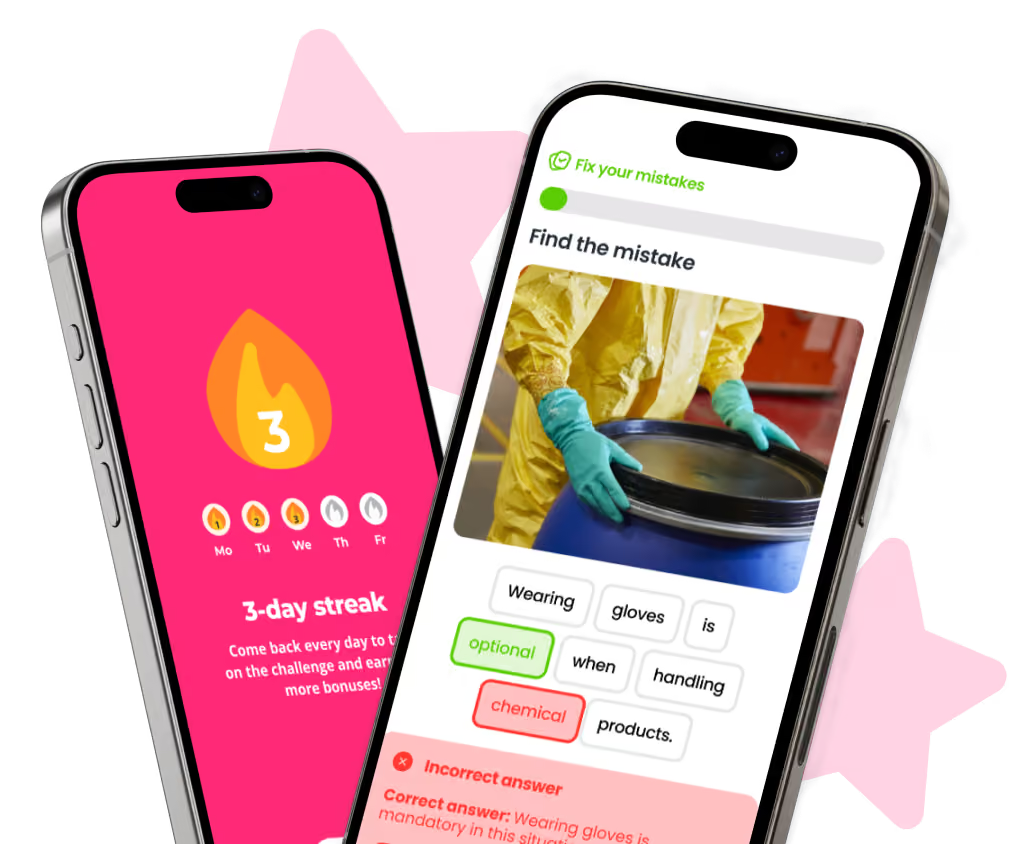
- SPARTED is a mobile-first LXP built for frontline and deskless teams, with gamification and social features.
An LXP (learning experience platform) is a digital learning platform built around the learner: it recommends short, personalized content, encourages peer exchange and makes training easy to access, often on mobile. Where an LMS is designed to administer training, a learning experience platform is designed to make people want to learn, and to keep learning.
Whether the acronym is new to you or you want to go deeper, this guide answers the main questions about learning experience platforms: what they are, how they differ from an LMS, and what they bring to an organization.
What is an LXP?
An LXP is an online learning platform whose design starts from the user experience rather than from training administration. Its job is to make learning engaging, personalized and easy to fit into the workday.
Definition of an LXP
LXP stands for Learning Experience Platform. According to TechTarget, the term was coined by industry analyst Josh Bersin. What defines an LXP is its focus on the learner.
Its purpose is to offer learning formats, content and an individualized experience that help employees build skills quickly. This is a real shift in the way remote training is designed and delivered: the satisfaction and motivation of employees are treated as a key condition for training success, not as a side effect.
Combined with mobile learning and Adaptive Learning (as in the SPARTED solution), an LXP delivers an immersive, engaging, dynamic and accessible experience, often in as little as three minutes a day.
It is important to distinguish the LXP from the LMS (learning management system), which is mainly oriented toward the administrative management of training. We come back to this difference later in this guide.
What is an LXP for?
An LXP exists to improve the learning experience. The underlying idea is simple: engaged, satisfied employees are the key to successful training. By motivating learners throughout their path, an LXP increases the chances that they finish their training and, above all, that they apply their new skills on the job.
To get there, LXPs put a strong emphasis on user experience (UX), with smooth, intuitive navigation from the moment learners log in.
LXPs also rely on artificial intelligence to individualize learning. By analyzing each learner's behavior, the platform serves content adapted to their needs and preferences: this is called Adaptive Learning. Communities of learners add another layer, with interaction between participants that traditional e-learning often lacks.
How does an LXP put the learner at the center?
An LXP puts the learner at the center by combining formats, varied content and human support. Three practices stand out: blended learning, rethought content and tutoring.
Blended learning
The first cornerstone of a learner-centered approach is blended learning. This hybrid method combines the advantages of in-person and remote training.
In-person sessions provide the initial structure of the learning path and a solid framework, while online training adds flexibility and autonomy. Classroom time makes it easier to put knowledge into practice. Online learning ensures continuity, with learners extending discussions or sharing thoughts on the LXP between sessions.
Rethinking content
Another key element is rethinking the learning content itself. On an LXP, variety and interactivity are what make learning attractive.
This approach encourages a mix of formats such as videos, infographics and audio. The platform avoids the monotony often associated with traditional methods and keeps the experience engaging.
Why does tutoring matter on an LXP?
Tutoring raises participation because it keeps learners from feeling alone, which is one of the main causes of disengagement in online training.
In France, the 11th edition of the ISTF Digital Learning Barometer (2025) found that 65% of tutored programs reach a completion rate above 60%, while 58% of non-tutored programs stay below 10%.
The tutor acts as a point of reference and supports the employee throughout their path, in person or online. Instant messaging and chat features on the LXP make communication easy, so employees can reach their tutor whenever they need to.
How does interactivity drive learner engagement?
Interactivity drives engagement because people learn better with and from others. LXPs build on this with community spaces and social features.
LXPs to increase interaction between learners
One of the defining features of LXPs is their emphasis on social interaction, which reflects how important collaboration is in the learning process.
Humans naturally benefit from interacting with others to develop and acquire the skills they need.
This idea of social learning was explored from the 1960s onward by psychologist Albert Bandura, whose work showed that people acquire new skills by observing others. LXPs apply this concept to professional training.
How? By recreating a social environment that encourages emulation inside the platform. In practice, this takes the form of community spaces inspired by social networks, where learners connect anytime, anywhere. They can discuss, share and comment on posts related to what they are learning.
LXPs to boost learner engagement
Learning experience platforms act as strong drivers of learner engagement, well beyond what traditional online learning offers.
With social learning, employees are no longer passive viewers behind a screen: they become active members of a learning community. Community spaces inspired by social networks create positive emulation, where learners exchange, share knowledge and help one another, which strengthens collective skill building.
Adaptive Learning personalizes the experience further. By letting learners choose their content and adapting automatically to their preferences and needs, it keeps the training highly relevant. Each person gets a unique path that fits their specific needs, which increases buy-in.
Mobile learning, built into the LXP, adds flexibility. Employees choose when and where they learn, connecting from their smartphone or tablet, and on some platforms even offline. Training then fits naturally into their daily routine.
In short, by combining social learning, Adaptive Learning and mobile learning, LXPs create an environment that supports active engagement. The experience is immersive and collaborative, and it helps learners not only acquire knowledge but also apply it on the job.
What is the difference between an LXP and an LMS?
An LMS manages training (enrollment, content delivery, tracking and compliance), while an LXP focuses on the learner's experience and engagement. The two serve different purposes and are often used together.
Two different approaches
The first fundamental difference is focus. An LMS concentrates on training management: administration, publishing learning content and tracking the overall training program. An LXP takes a resolutely learner-centered approach. It personalizes the learning experience and provides tailored learning formats so that people build skills quickly.
For a side-by-side comparison and criteria to choose the right platform, see our article on LMS vs LXP.
Microlearning vs. e-learning
Another major difference lies in the content. An LXP favors micro-content such as short games, videos, blog posts or podcasts, in a microlearning approach. An LMS mostly delivers longer e-learning modules, often in video format.
This also shows in the length of learning sequences: they are shorter on an LXP, which helps learners absorb knowledge quickly.
What are the benefits of an LXP for a company?
An LXP brings companies benefits on two levels: it makes training easier to manage, and it improves the overall performance of the organization. The table below summarizes the main ones.
| Benefit | Description |
|---|---|
| Time savings | An LXP simplifies training management by centralizing everything in one platform. From enrollment to results analysis, processes are automated, which saves the training team a significant amount of administrative time. |
| Personalized learning paths | LXPs make it easy to build personalized learning paths. Each employee gets modules and learning formats suited to their needs and preferences, which makes the training more relevant. |
| Flexible learning | Learning methods on an LXP, such as mobile learning and Adaptive Learning, offer maximum flexibility. Employees learn where and when they want, around their own preferences and schedule constraints. |
| Content enriched by learners | Learners take part in content curation on an LXP. They select relevant information and share it in community spaces. This enriches the available resources and creates healthy emulation between colleagues. |
| Training segmented by role | LXPs allow training to be tailored in depth to each job and its responsibilities, so that every employee builds the specific skills their role requires. |
| Better overall performance | When employees only learn skills that are directly useful, they go back to their jobs more effective. The result is better business outcomes and faster adaptation to market changes. |
Which learning methods does an LXP support?
LXPs support a range of learning methods that change the way employees acquire knowledge:
- Social learning: LXPs encourage peer-to-peer learning and break with the traditional top-down model. Community spaces inspired by social networks make it easy to exchange, share resources and collaborate.
- Mobile learning: a core feature of LXPs. Employees connect from their smartphones, which makes learning flexible and compatible with busy schedules.
- Adaptive Learning: using artificial intelligence, Adaptive Learning personalizes learning paths by analyzing learner behavior. Each person receives individualized content that matches their needs and preferences.
- Interactive or collaborative learning: LXPs encourage interaction in virtual classrooms. Digital communication tools support group work, live questions and interactive quizzes for an immersive, collaborative experience.
- Gamification: by adding game elements, gamification motivates learners with rewards along their path. It drives active participation and makes learning more playful.
- Blended learning: LXPs combine in-person sessions with online training. This hybrid approach gives learners more flexibility, bringing together the direct interaction of the classroom and the freedom and autonomy of online learning.
SPARTED's LXP
SPARTED is a mobile-first LXP designed for mobile, on-the-go workforces. As smartphones have become the main digital device for many employees, its solution is built for the needs of companies whose teams are rarely at a desk.
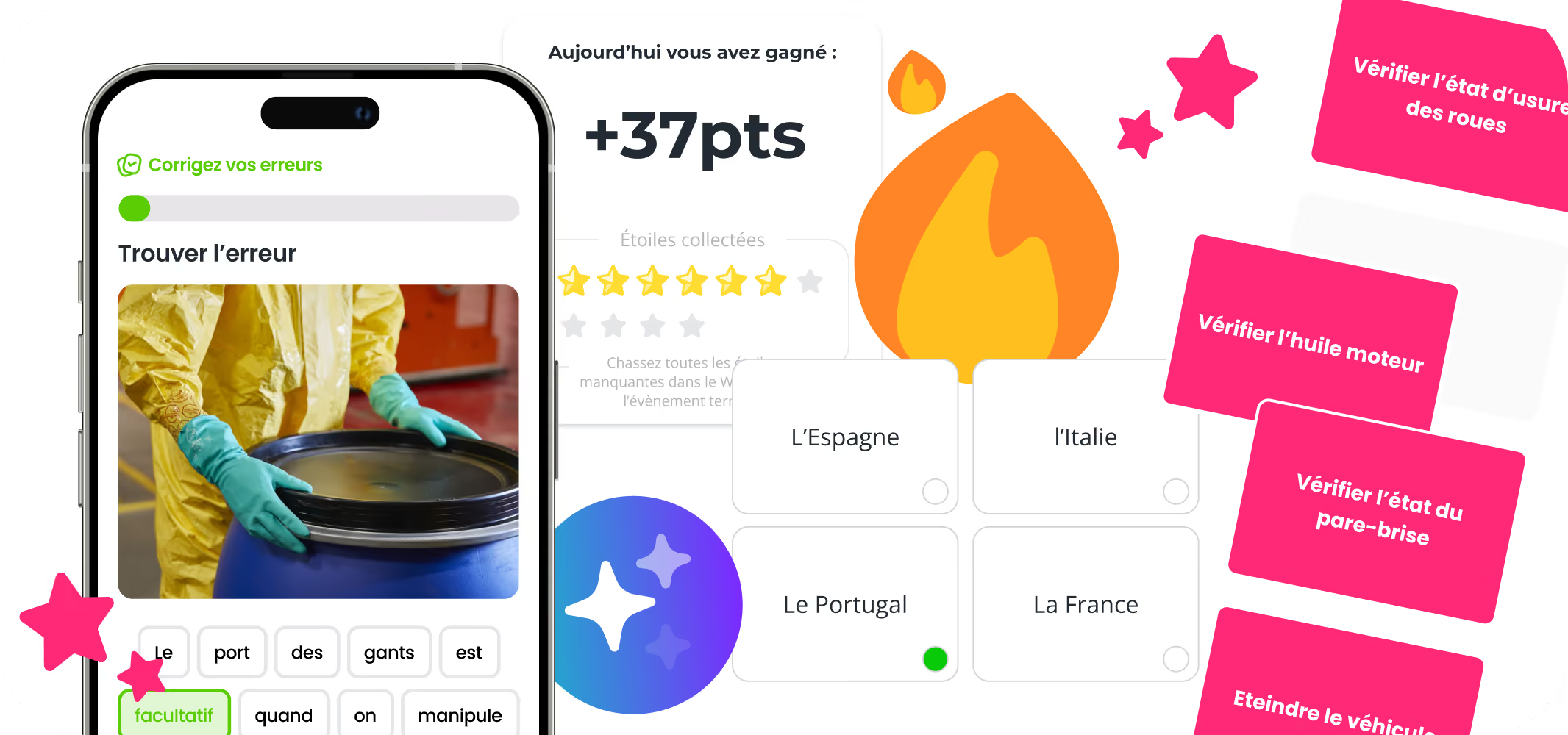
SPARTED positions itself as a full LXP, with an emphasis on gamification, mobile learning and social learning, through continuous team engagement based on a simple, fun game experience. With a customized mobile app and a dedicated Back Office, SPARTED offers a learning experience that is playful, social and short.
Bringing LXP learning methods together in a mobile solution shows how technology can enrich professional learning. SPARTED gives companies an adaptable way to meet their changing training and skill development needs.
Frequently asked questions
What does LXP stand for?
LXP stands for learning experience platform. It is a learning platform designed around the learner's experience, with personalized recommendations, short content and social features, rather than around training administration.
Is an LXP the same as an LMS?
No. An LMS (learning management system) is built to assign, track and report on training, especially for compliance. An LXP is built to engage learners and personalize their learning. Many organizations use an LMS for administration and an LXP for daily engagement.
What are the main features of a learning experience platform?
Most LXPs offer content recommendations, personalized learning paths, short formats such as microlearning, social and community features, gamification, mobile access and analytics on usage and progress.
Who should use an LXP?
An LXP suits organizations that want employees to learn continuously rather than once a year, especially when teams are distributed or rarely at a computer. Retail, field sales, logistics and manufacturing teams are typical examples.
Is SPARTED an LXP?
Yes. SPARTED is a mobile-first LXP that delivers training in a few minutes a day through a gamified, social mobile app, with a Back Office to manage content and track results.


Need a mobile learning solution?
A simple, fast and engaging solution, up and running in under 2 weeks.
Discover our solutionA mobile LXP for your frontline teams
Short, gamified Courses on mobile, Breaking News and analytics in one platform. See how SPARTED engages deskless employees.
Book a demoGuide How to measure the ROI of your frontline training
Concrete calculations, proven methods and field examples to justify your training investment to leadership.
Read the guide →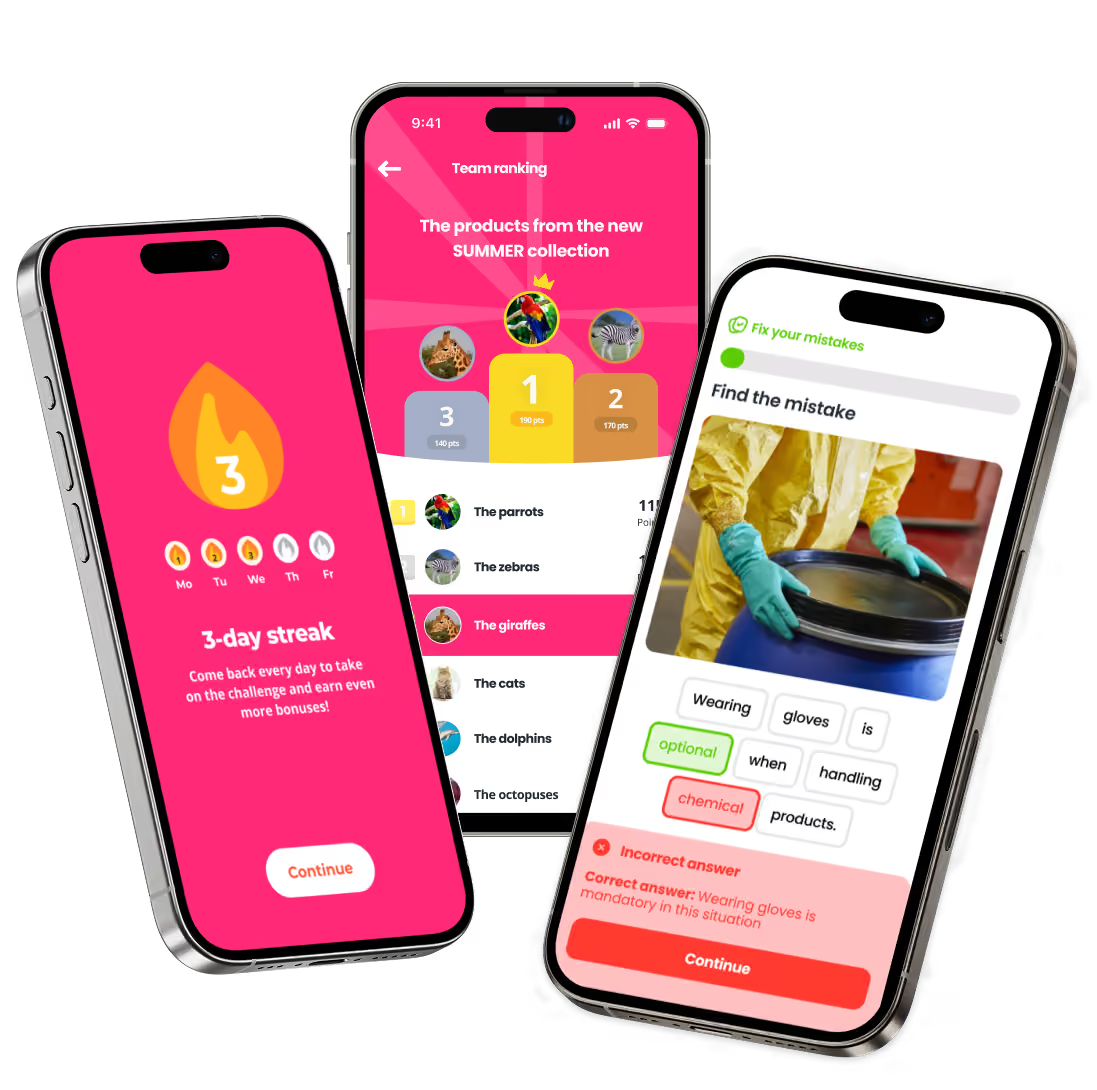
Need a mobile learning solution?
The simple, social and gamified solution, up and running in under 2 weeks.
Discover our solution