






Microlearning works because short modules of a few minutes fit into the workday, can be repeated at spaced intervals and rely on quizzes that strengthen memory. Those mechanisms explain the main microlearning benefits: better retention, higher completion, mobile access, stronger engagement, faster production and easier personalization.
Microlearning is a training approach that delivers content in short, standalone modules, each focused on a single objective. It is now mainstream: in a 2017 survey of 596 talent development professionals, ATD found that 38% already used microlearning and another 41% planned to start within a year.
Here are 6 reasons why microlearning is such an effective training strategy, and a lasting one.
Key takeaways
- Microlearning delivers training in short modules, usually a few minutes, each with one objective.
- Short, repeated and quiz-based modules apply spaced repetition and the testing effect, two well-documented memory levers.
- Because 91% of U.S. adults own a smartphone (Pew Research Center, 2025), microlearning reaches deskless employees where they are.
- Short modules are faster to produce and update than long courses.
- Modular content makes AI-assisted personalization by role and level practical.
1. Why does microlearning improve retention?
Microlearning improves retention because short modules avoid cognitive overload and can be reviewed and tested regularly. Long sessions are often too dense to be absorbed for good, while short sequences let the brain focus on one idea at a time.
Two research findings explain the effect. According to Roediger and Karpicke (2006), students who were repeatedly tested on a passage recalled 61% of it a week later, versus 40% for those who reread it. And a 2006 meta-analysis by Cepeda and colleagues confirmed that spacing out reviews improves long-term memory.
By sending out small modules on a regular basis, you put spaced repetition into practice, a proven way to counter the forgetting curve. In other words, microlearning doesn't just train people faster, it trains them better.
2. Much higher completion rates
Microlearning gets higher completion because each module is short enough to finish in one sitting. Offering a course is one thing, making sure people finish it is another, and long courses are often abandoned halfway.
The format gives learners a sense of quick, effortless progress. Every completed module becomes a small win that boosts motivation. And because sessions last only a few minutes, microlearning fits easily into the workday, with no need to block out dedicated time.
3. Training designed for mobile
Microlearning is built for mobile use, on the device employees already carry. According to the Pew Research Center (2025), 91% of U.S. adults own a smartphone, which makes it possible to learn on a commute, between meetings or during a coffee break.
Training is no longer a one-off event, it becomes part of everyday life. With short formats and a smooth mobile interface, learning slips into the daily routine, just like a message or a notification.
It also helps improve accessibility, particularly for deskless employees or those far from headquarters. Mobile learning opens the door to training that truly reaches everyone, whatever their role.
4. A big boost in engagement
Microlearning drives learner engagement because it asks for active participation in small doses. Long, top-down formats often feel like a chore, while short modules encourage autonomy and motivation.
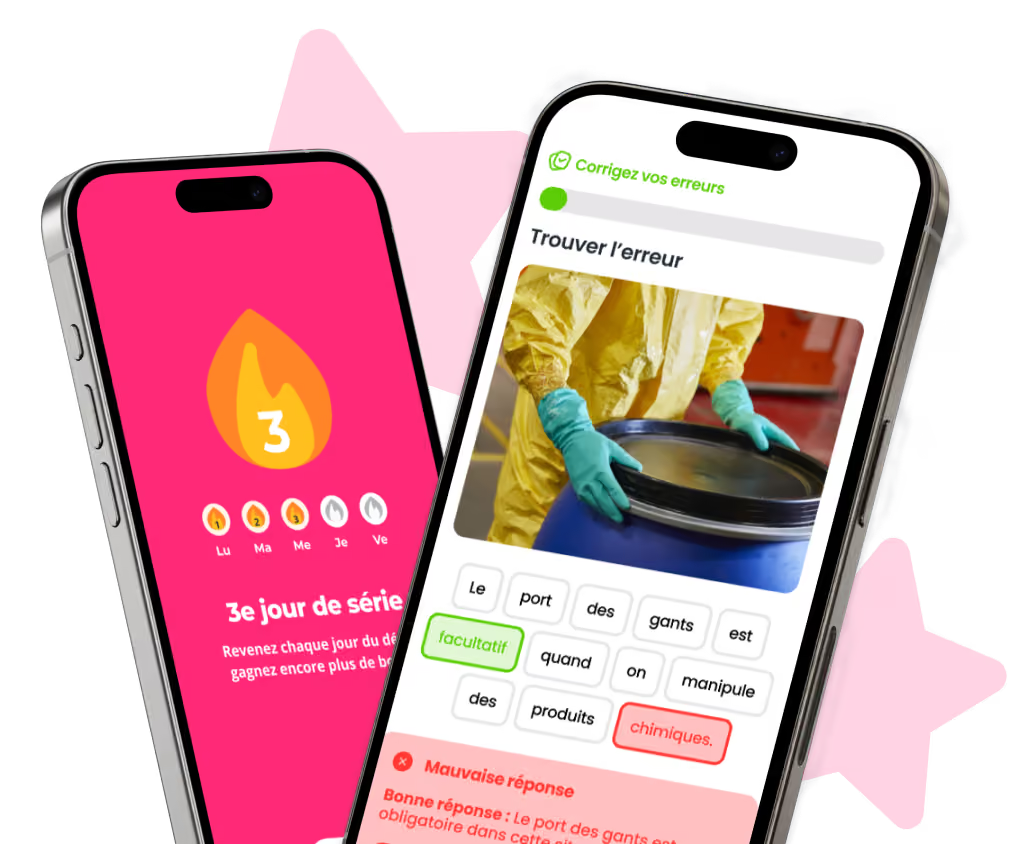
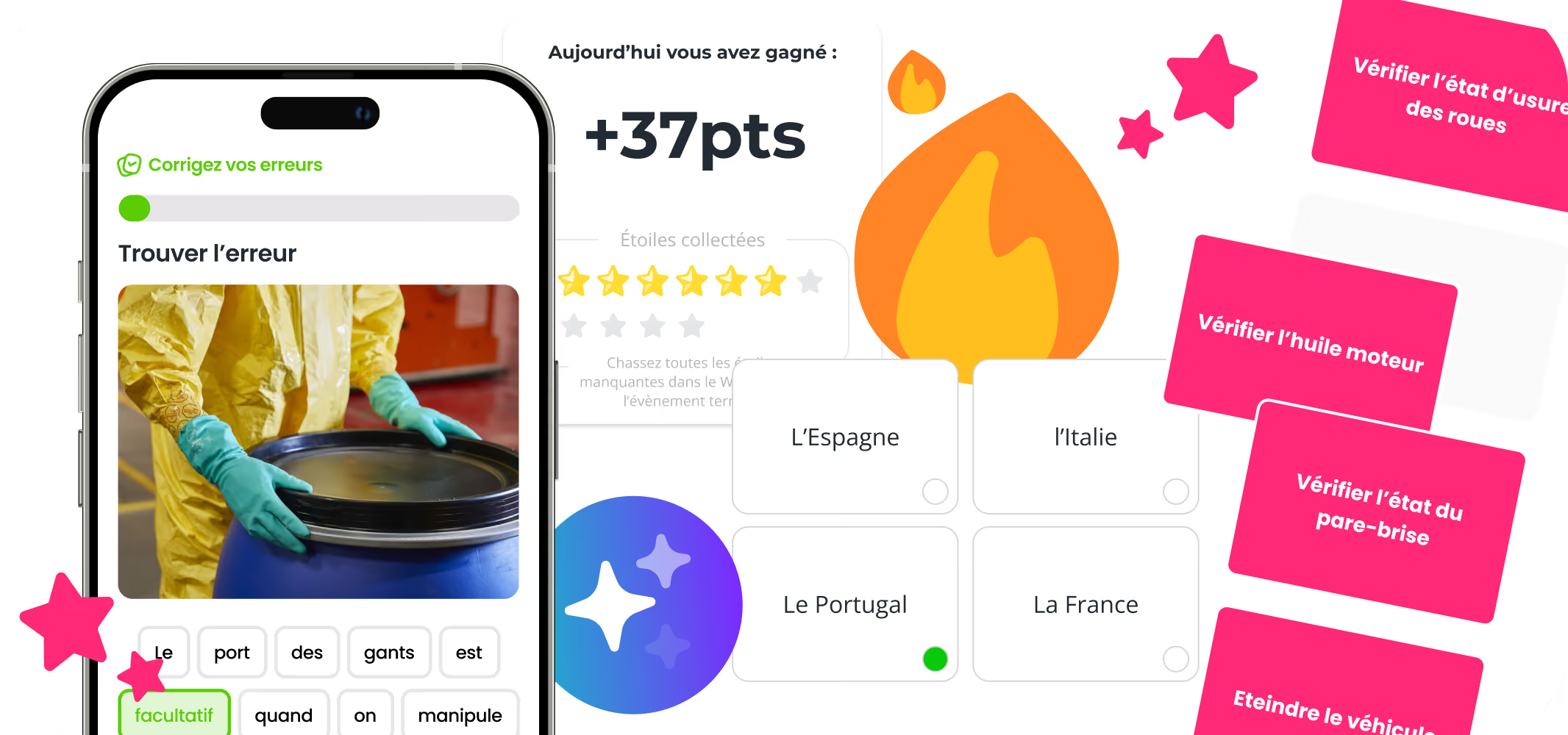
Simple interactive elements, such as quizzes, reminders, notifications, game mechanics and progress tracking, create an ongoing learning dynamic that brings learners back day after day.
5. Is microlearning faster and cheaper to produce?
Yes: creating a module that lasts a few minutes takes fewer resources than building a long course, and it makes updates simpler and faster. For instructional designers, microlearning is a source of agility and savings, not only of learning gains.
When a product, a procedure or a regulation changes, only the affected modules need to be rewritten. This lets training teams respond faster, iterate, and adapt content based on feedback or changes in the business.
In short, microlearning is a more flexible format, quicker to roll out, and therefore better aligned with the operational pace of companies.
6. Easier personalization with AI
Microlearning lends itself particularly well to personalization because each module is a building block. With the rise of artificial intelligence, it is now possible to build learning paths tailored to each profile without multiplying design hours.
At SPARTED, for example, AI is built in to automatically generate learning paths from existing content. Each user then receives targeted modules based on their level, needs or progress history, creating a more relevant and more engaging learning experience.
All in all, microlearning becomes smart by adjusting to each learner. This ability to combine technology, personalization and simplicity explains its growing success.
Frequently asked questions
What is microlearning?
Microlearning is a training approach based on short, standalone modules, each focused on a single learning objective. Modules are usually delivered on a smartphone and combine short content with quizzes.
How long should a microlearning module be?
There is no fixed rule. ATD's 2017 research found that talent development professionals consider about 10 minutes the ideal average, with a maximum of 13 minutes. For frontline teams, SPARTED designs sessions of around 3 minutes so they fit between two tasks.
Is microlearning effective for retention?
Yes, when modules are repeated over time and include active recall. Research on spaced repetition (Cepeda et al., 2006) and on the testing effect (Roediger and Karpicke, 2006) shows that spaced quizzes beat a single long session followed by rereading.
What are the limits of microlearning?
Microlearning is less suited to complex skills that require long practice, deep analysis or hands-on training. It works best as part of a blended program, reinforcing classroom sessions and covering product knowledge, procedures and refreshers.


Need a mobile learning solution?
A simple, fast and engaging solution, up and running in under 2 weeks.
Discover our solutionSee SPARTED microlearning in action
Short, gamified and measurable, SPARTED modules apply proven microlearning principles to make knowledge stick.
Book a demoGuide How to measure the ROI of your frontline training
Concrete calculations, proven methods and field examples to justify your training investment to leadership.
Read the guide →Need a mobile learning solution?
The simple, social and gamified solution, up and running in under 2 weeks.
Discover our solution