




Comparison: Traditional LMS, Modern LMS, or Mobile Learning – Which Solution is Right for You?
With the wide range of e-learning platforms available, choosing the one that best aligns with your objectives can be challenging.
Traditional LMS platforms are favored by large companies looking for a centralized and structured solution to manage training at scale. Modern LMS integrate more interactive and collaborative features, offering a more engaging learning experience. Finally, mobile learning, with its mobile-first and gamified approach, is revolutionizing training by making it more accessible, flexible, and motivating on a daily basis.
Explore their differences to make an informed decision.
Get it in 30 seconds
Three approaches to training, three different models

Three families of platforms built for different training needs

A short daily format that fits field teams

Gamification and team dynamics that make learning stick

Quick integration with the HR tools you already use



Traditional LMS: a structured and centralized solution
A learning management system (LMS) is designed for large companies with significant training management needs.
These platforms enable content centralization, detailed learner tracking, and a well-defined learning structure. They remain a reference for organizations requiring a formal framework and advanced skills management.
🗂 Scalability for large organizations
An LMS is built to handle a high volume of learners and training programs. It helps structure learning paths, track performance, and certify skills over the long term.
⚙️ A structured and customizable framework
These platforms offer advanced features such as module creation, reporting, and certification, making them well-suited for regulatory or industry-specific training.
⏱️ Designed for long and in-depth training
Traditional LMS platforms focus on comprehensive learning paths, often in the form of long and detailed courses that require a significant time investment.
📖 Leading solutions in the market
Platforms like Cornerstone, Moodle, and TalentLMS are widely used by large organizations looking for a formalized approach to training management.
Modern & collaborative LMS: a more flexible alternative
Modern LMS retain the essential features of traditional LMS while integrating more interactive and collaborative tools. Their goal is to facilitate corporate learning by making training more accessible and engaging.
🧩 More diverse learning formats
These platforms combine e-learning, interactive videos, and collaboration to adapt to different learning styles.
🔗 Better integration with existing tools
Designed to be more open, these LMS easily connect to HR tools, CRM, or communication platforms, making adoption easier.
💬 Improved engagement, but variable
With features like comments, social interactions, and real-time feedback, the experience is more engaging than with a traditional LMS. However, adoption can vary depending on usage and learner profiles.
🏆 Well-established solutions on the market
Platforms like 360Learning and Docebo are among the leading solutions for more interactive learning, though they remain based on a traditional LMS framework.
Mobile learning: engage your teams with a social & gamified solution
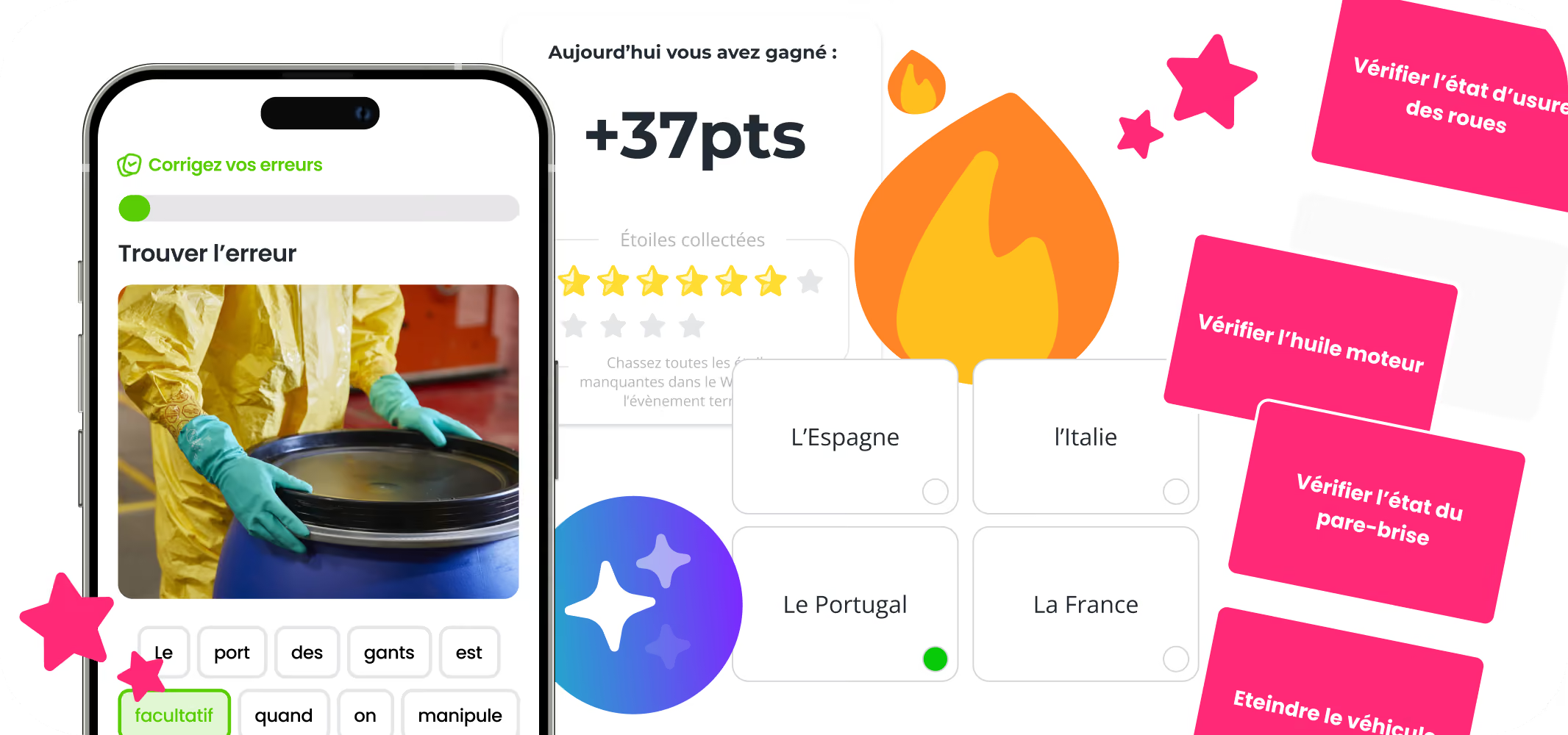
Mobile learning, like SPARTED, is redefining the way companies train their employees. With its mobile-first approach, focused on microlearning and gamification, it is designed to captivate teams and ensure rapid adoption.
⚡ Short and engaging learning
With 3-minute daily training sessions, employees enjoy a simple and accessible experience directly from their mobile devices. This makes it easy to integrate learning into their daily routine.
🎲 Stimulating challenges, day after day
Every month, learners discover new interactive learning paths and gamified campaigns. With quizzes and engaging storylines, motivation and engagement remain high.
👥 A team-driven learning experience
Ambassadors play a key role in animating teams and creating a true learning organization, strengthening cohesion and knowledge sharing.
🧭 Personalized project support
Our learning experts guide you at every stage: deployment, monitoring, and optimization. We help you maximize the impact of SPARTED on your training objectives.
🔍 Which solution is right for you?
| Criteria | Traditional LMS | Modern and Collaborative LMS | Mobile Learning |
|---|---|---|---|
| Target audience | Large companies with complex training and certification needs. | Companies looking for a more interactive and social platform. | Ideal for field teams who need short, engaging, and accessible content anywhere. |
| Format | Long, structured courses, suited for certifications and in-depth learning. | A mix of e-learning, interactive videos, and collaborative modules. | Gamified microlearning with 3-minute sessions, perfect for quick and daily learning. |
| Key advantage | A centralized system to track, manage, and analyze all training in one platform. | An interactive and collaborative approach to encourage social learning. | Maximum engagement through gamification, boosting participation and retention. |
| Limitation | Low engagement due to long content and lack of interactivity. | More dynamic than a traditional LMS but still reliant on a computer. | Less suited for large-scale, in-depth training programs. |
| Integration with HRIS | Often native, with robust but complex and costly customization options. | Easier integration with HR tools, CRM, and communication platforms. | Fast and simple, seamlessly complementing existing tools without technical effort. |
🤝 Leading companies trust us—why not you?
More than 100 companies have joined the great adventure of SPARTED's mobile learning.

Ready to boost your performance with mobile learning ?
Discover SPARTED's social, gamified, 3-min per day learning experience!


